Exhibition Archive
For more than a decade, Erika Hirugami has worked across museums and galleries in México and the United States, exploring a range of ideas through exhibition-making.
2026
-
![]()
Foto 818
Photography has long privileged iconic centers while overlooking what surrounds them. In Foto 818, Amarales, Iñiguez, Mejorado, and Novales, four lens-based artists with deep ties to the San Fernando Valley, render the region legible as a site of artistic production and cultural imagination. Foto 818 insists that the Valley's visual language is not peripheral to Los Angeles, but one of its centers.
Los Angeles Mission College’s AMC Gallery, Sylmar, CA.
-
![]()
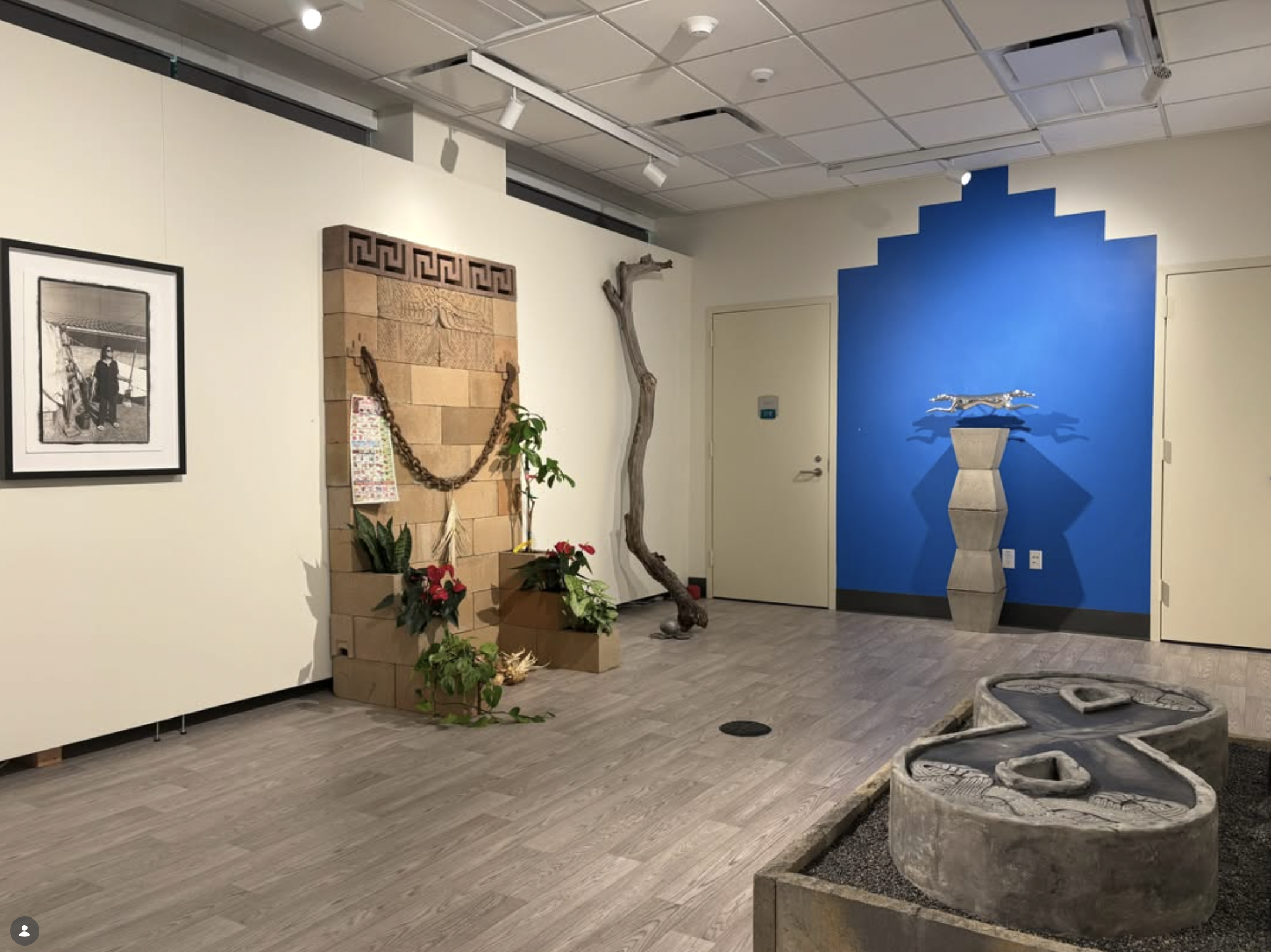
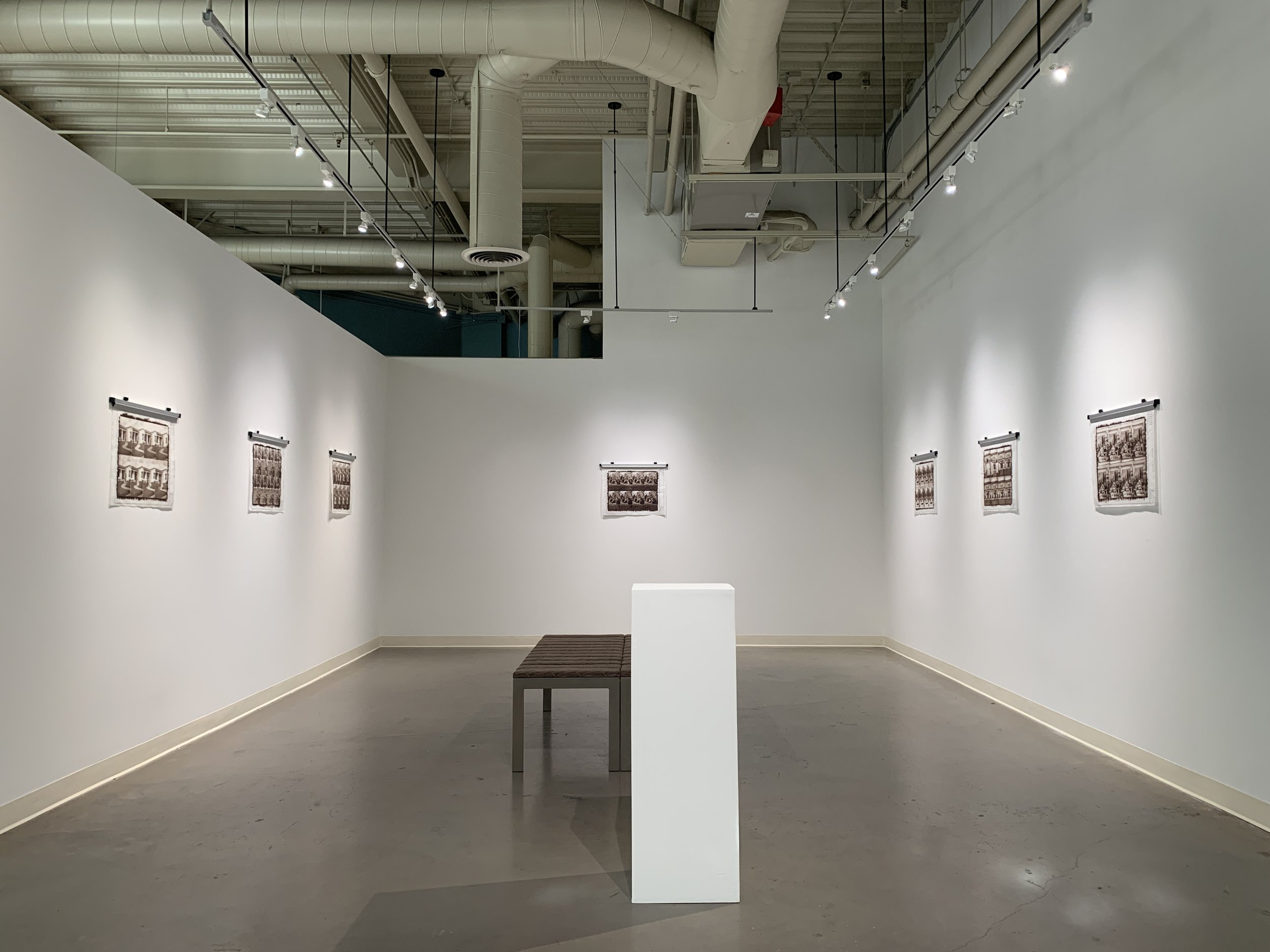
Antonio Perez: Entanglement
In Entanglement, Antonio Perez works in platinum-palladium printing and cast concrete to consider how people remain bound across time and distance. Made after losing his father and brother within a single year, and shaped by an enduring admiration for his mother, the work draws on quantum entanglement and rasquachismo to render grief as connection rather than absence. Entanglement speaks to the bonds of one family while opening onto broader questions of home, inheritance, and how cultural ties endure.
Moreno Valley College Art Gallery. Moreno Valley, CA.
-
![]()
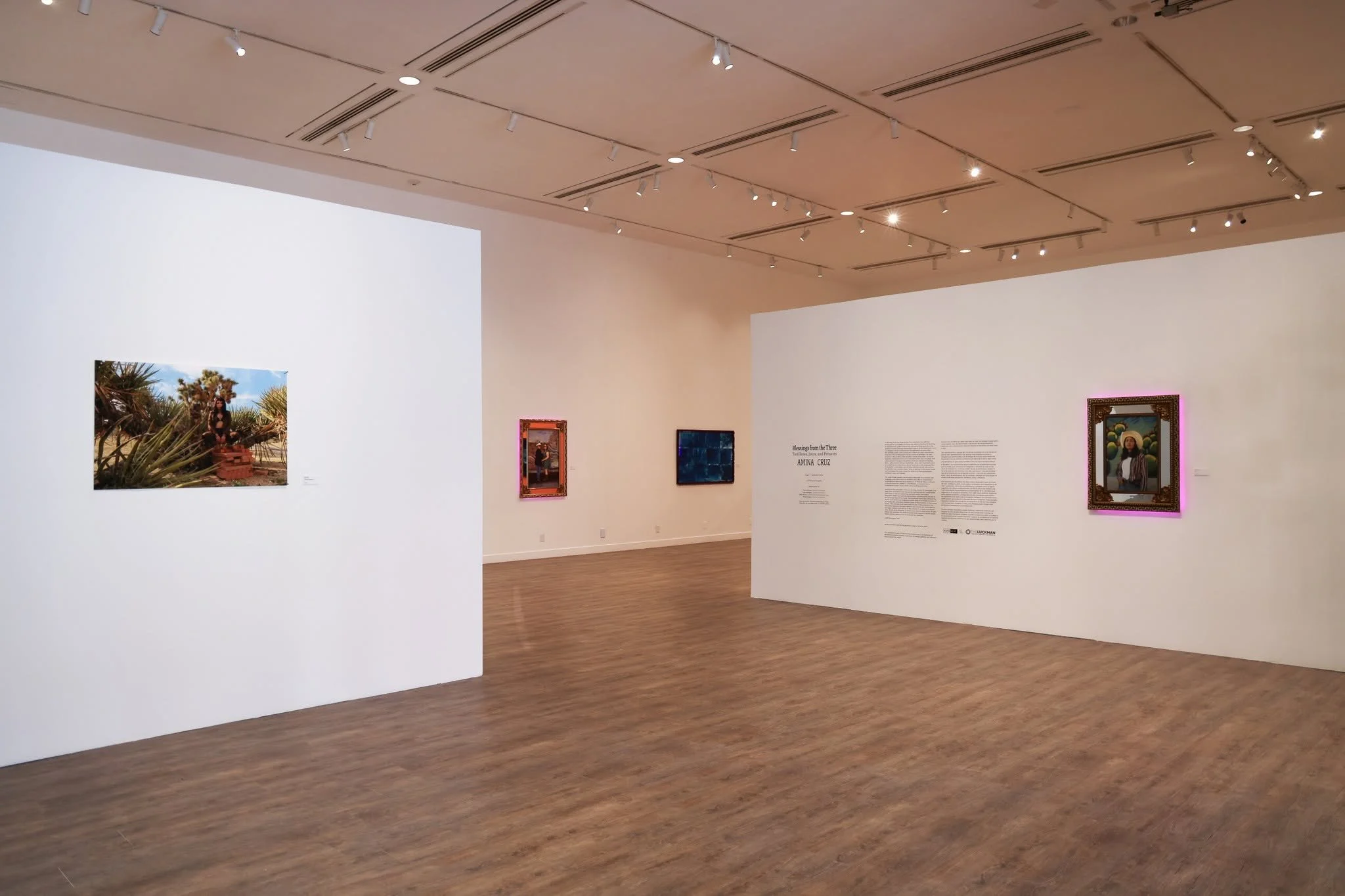
Blessings from the Three: Tortilleras, Jotos, and Potaxies
Amina Cruz prints the redlined landscapes of Los Angeles as cyanotypes on mirrors, so that anyone who looks is reflected into the geography. Drawing on Anzaldúa's la facultad, the work gathers a sacred trinity (la Tortillera, el Joto, y les Potaxie) who carry inherited dispossession in their queer bones. The dance floor becomes the terrain where that inheritance is sublimated into anger, sadness, love, and joy, and cultural memory is rewritten rather than abandoned.
California State University Los Angeles Luckman Gallery, Los Angeles, CA.
-
![]()
FuturoGeneracional
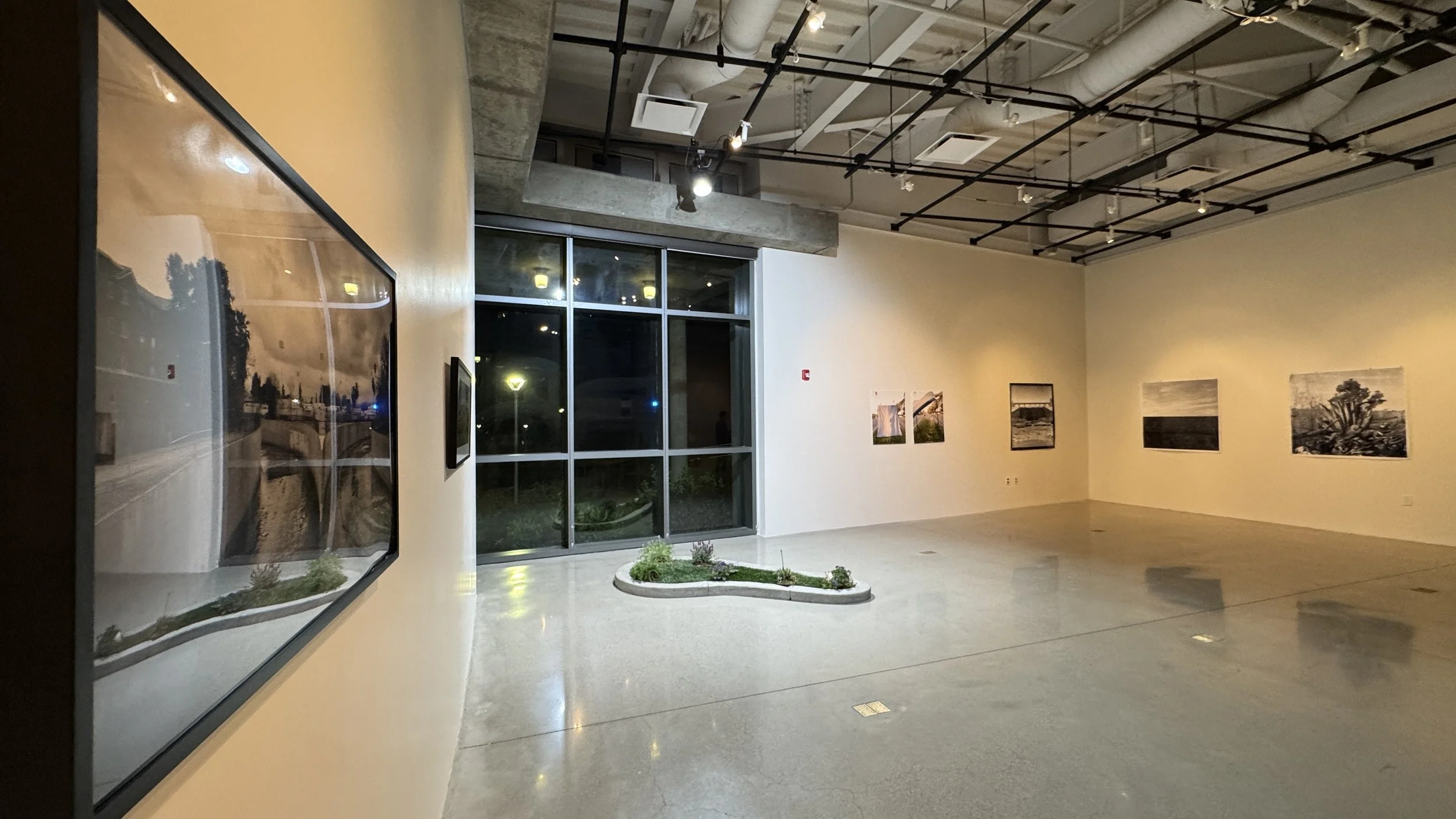
Curated through an open call, FuturoGenerational brings together student artists from FotoSoCal’s participating colleges. Working in photography, installation, and expanded lens-based practice, they turn the gallery into a portal where landscapes, homelands, venues, and generations meet. FuturoGenerational addresses a ruptured world with curiosity and tenderness, affirming the part artists play in repairing it.
California State University Los Angeles Luckman Gallery, Los Angeles, CA.
2025
-
![]()
Fuego Eterno: Soberanías Visuales
Brings together sixteen artists whose ancestral lineages — Ayuujk, Nahua, Maya-Ch'ol, Ñuu Savi, Otomí, Maya-Kaqchikel, P'urhépecha, Diidxazà, Maya-Tsotsil, Zapotec, Sarhua, among others — predate Spanish colonialism and remain central to their contemporary practice. This project reassembles the Spanish colonial geography as a field of sovereign solidarities rather than a map of conquest. Moving beyond a critical interrogation of nation and citizenship, the exhibition proposes scholarship that moves across borders, languages, and disciplines, refusing the extractive epistemologies colonialism left in place.
University of Virginia Ruffin Gallery. Charlottesville, VA.
-
![]()
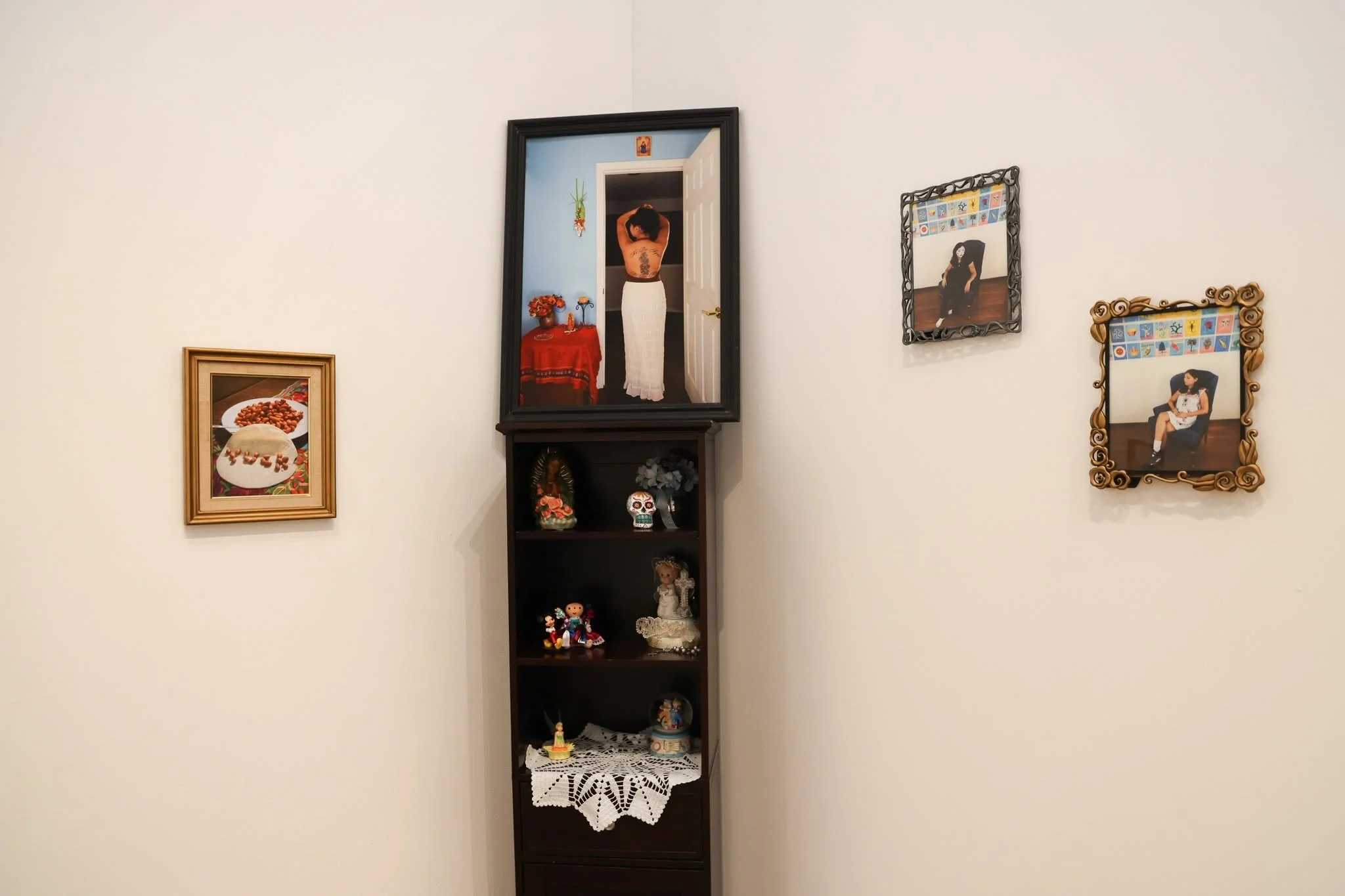
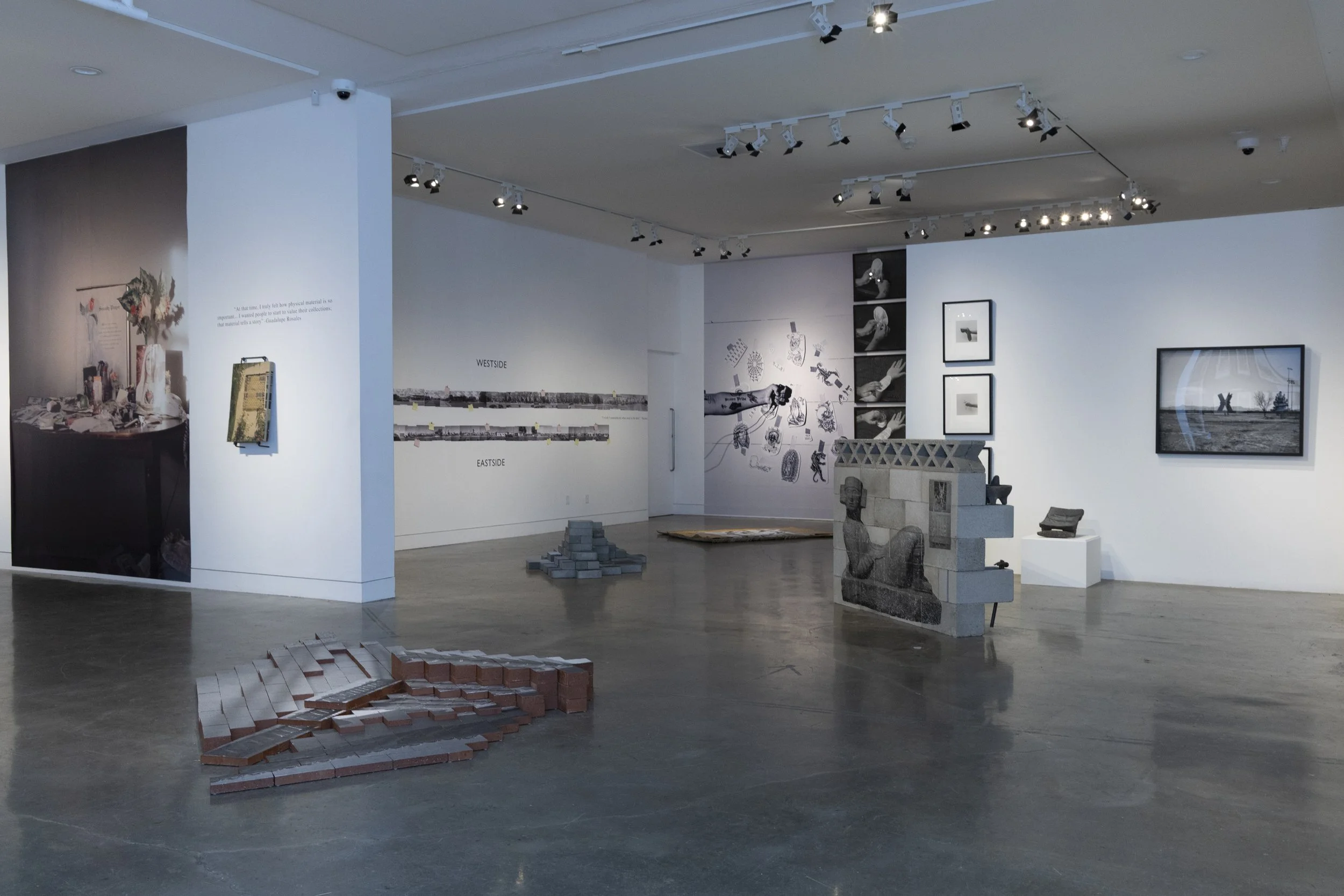
Concrete Hope | Esperanza Concreta
Concrete Hope brings together emergent photographers and lens-based artists from SoCal, working across installation media as the material ground for photographic depiction. Concrete Hope aesthetic axis is a celebration of all things Brown (piñatas, abuelitas, tatuajes, virgencitas, mercados, metates, buganvilias, veladoras, ladrillos, familia) the vocabulary of a community united by culture. What emerges is an act of self-affirmation birth from within the lived experience of SoCal’s complex Latine community, rendered by the people who live it.
Santa Monica College Barrett Art Gallery, Santa Monica, CA.
-
![]()
Nurturing Masculinities: Juan Manuel Valenzuela
Nurturing Masculinities is Juan Manuel Valenzuela's blueprint for the soft margins of inherited masculinity, an aesthetic study of what machismo hardens and what tenderness might loosen. Across Nurturing Masculinities, Valenzuela juxtaposes what he learned from his elders with the kind of care he intends to pass to his son, locating the work precisely where brownness and manliness converge. In doing so, Nurturing Masculinities treats masculinity not as a fixed set of attributes but as something inherited, examined, and deliberately revised across generations.
Santa Monica College Emeritus Gallery, Santa Monica, CA.
-
![]()
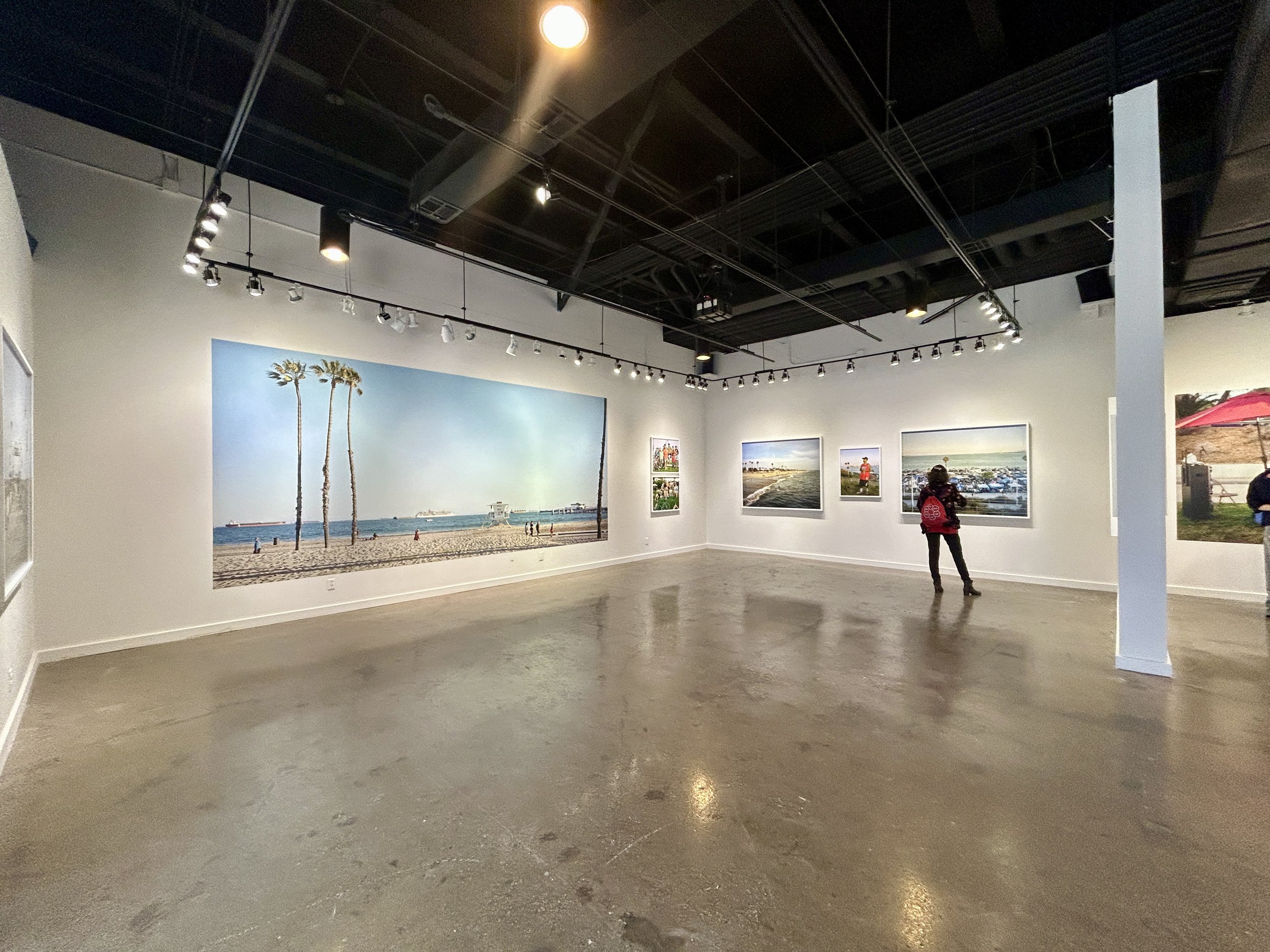
People's Beach: Aydinaneth Ortiz
The People's Beach takes its bearings from Aydinaneth Ortiz's mother's daily commute to Belmont Shore — the corner of Los Angeles County that remained accessible to her community when the beaches beside it did not. Ortiz photographs the whole of that geography: greenery and breakwater, seascape and suburban sprawl, the people who come to work and to play. The People's Beach holds memory and reality at once, collapsing the distance between Ortiz's childhood and today.
Pasadena City College Art Gallery. Pasadena, CA.
-
![]()
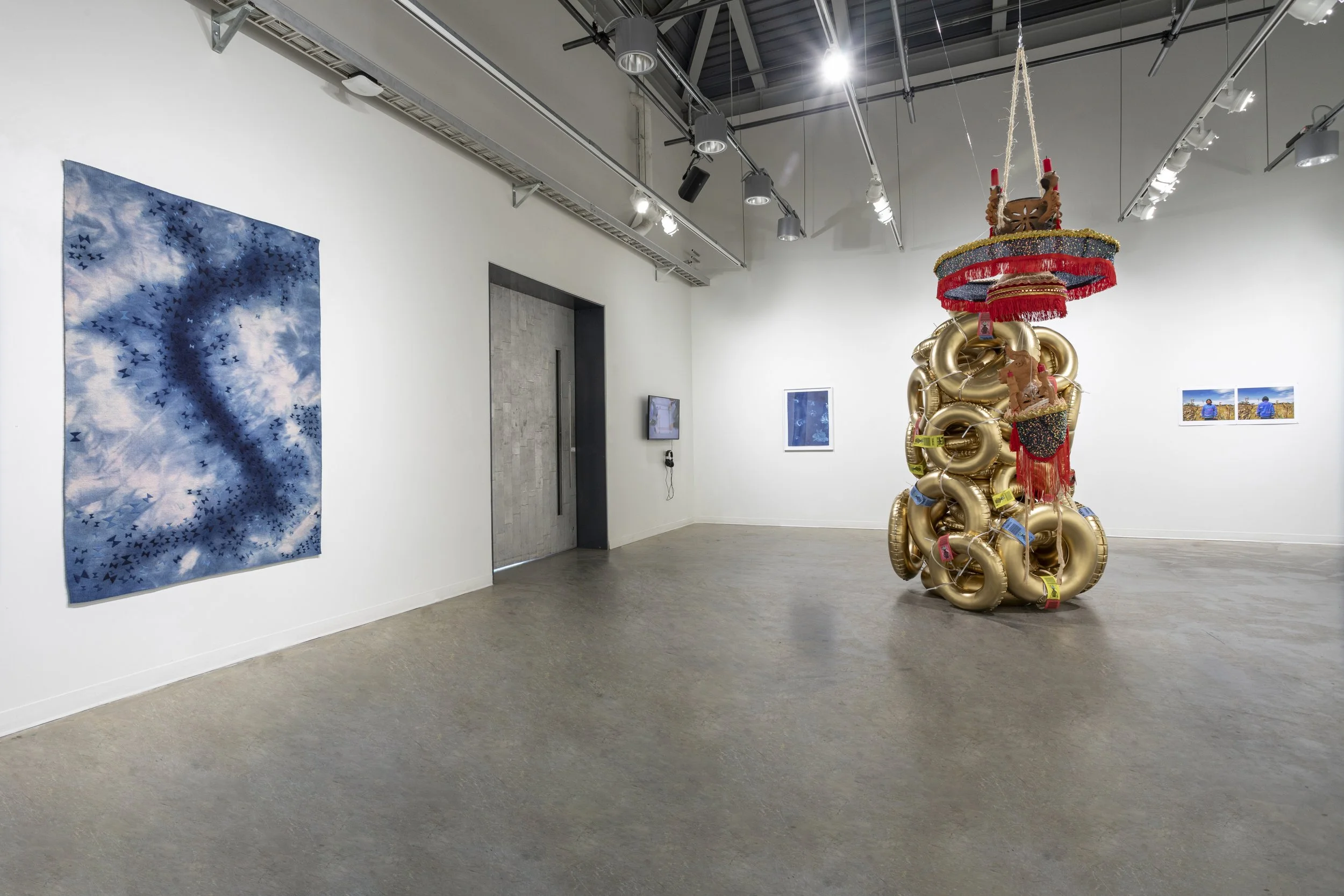
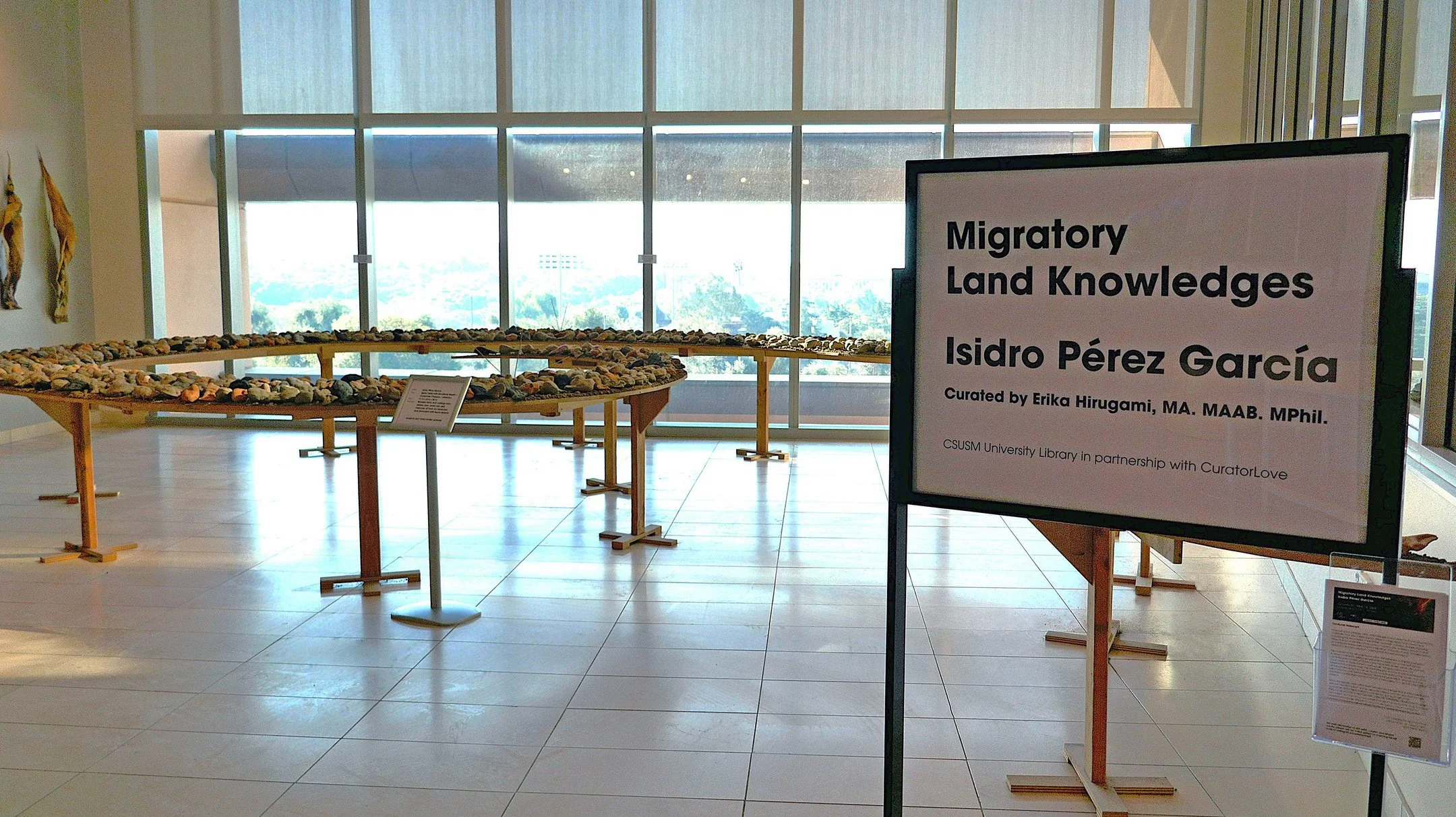
Migratory Land Knowledges: Isidro Pérez García
Pérez García sources his materials locally (maguey, tule, cochinilla), plants shared across a border that arrived after the methods he works in. Migratory Land Knowledges asks what an immigrant leaves behind on crossing, and what inherited knowledge is obscured when a person is absorbed into a new economy. Against passports, bureaucracy, and settler colonialism, Migratory Land Knowledges proposes land itself as the ground of connection.
California State University San Marcos Library Gallery. San Marcos, CA.
2024
-
![]()
Chicanexus
Chicanexus brings together two master printmakers, each with more than two decades in the medium, whose ancestries (New Mexican and Jewish, Yaqui Chicano) place them squarely inside the question Chicanx theory has asked since El Movimiento: who counts as enough. Across silkscreen, linocut, and block printing on Japanese washi, Chicanexus surveys the porous nature of enoughness, declining the qualifier while celebrating what sixty-four years of Chicanx printmaking made possible. In Chicanexus, Iztaccíhuatl and Popocatépetl share space with children and Yalitza Aparicio, amid flora and a plethora of Guadalupes, on the premise that artists pollinate culture and truth.
Los Angeles Mission College AMP Gallery, Sylmar, CA.
-
![]()
Queerteñx: Trans Fronterizes / Cuir Transnationalism
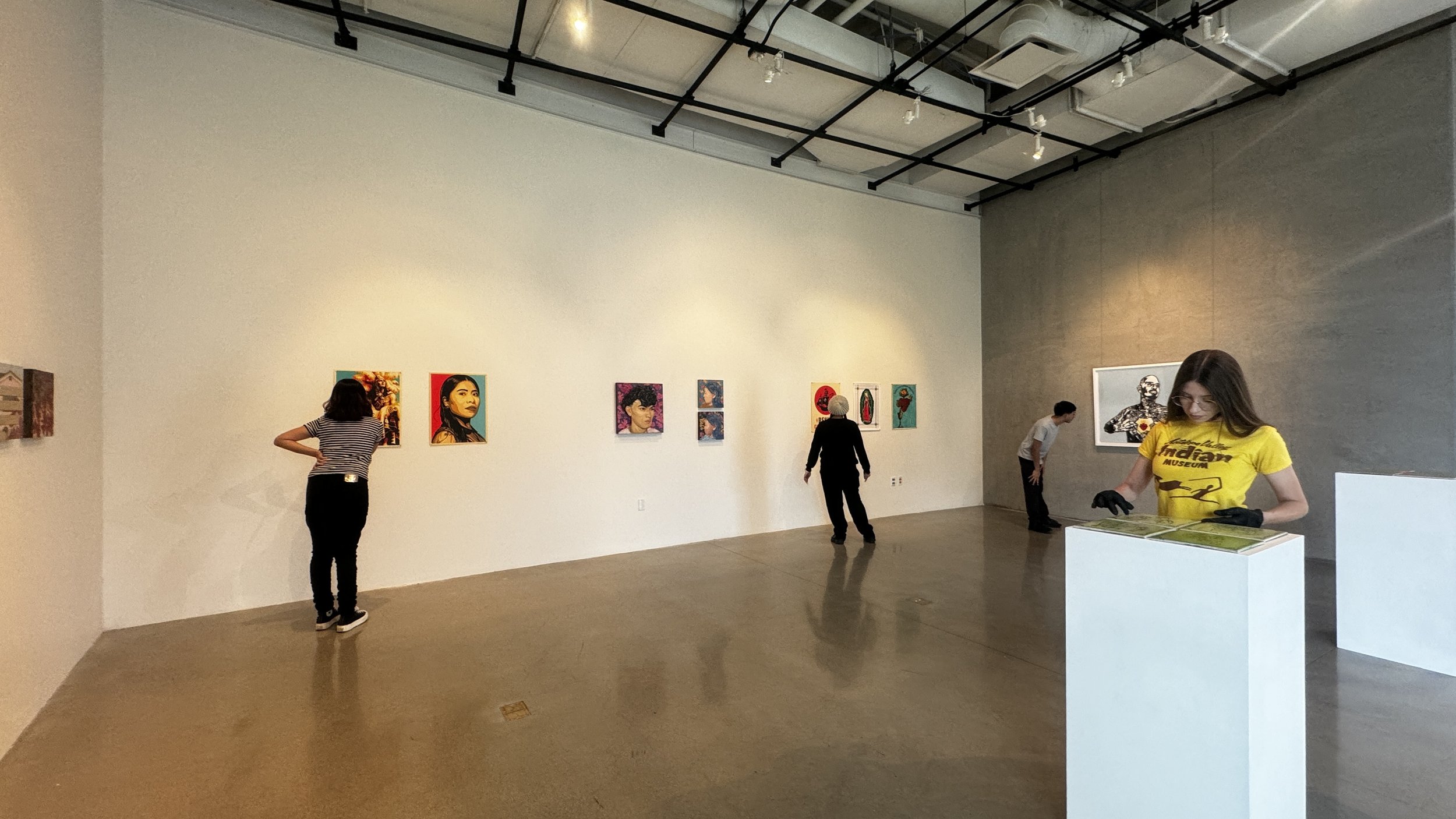
Queerteñx brings together José Villalobos and Salvador de la Torre in work bound to the México/United States border aesthetically, historically, geographically, and conceptually. Across Queerteñx, fajos piteados, charola belt buckles, glittered Tejanas, hand-embroidered confessions, and barbed wire assemble a provocation against machismo, heteropatriarchy, and cis-supremacy, nepantleando in diaspora, where queerness becomes a site of infinite possibility. Villalobos and de la Torre hold Queerteñx, Emorteño, Rancholo, Norteño, and Mexican rancho cultures as inseparable to speaks from the queer and trans experience of the undoc+ diaspora, for whom ancestral lineage remains a source of wisdom regardless of contemporary border formations.
Loyola Marymount University Laband Gallery, Los Angeles, CA.

2023
-
![]()
Pertenecer | Encarnar: The Aesthetics of Undocumentedness
Pertenecer | Encarnar gathers ten artists at the University of Virginia around a premise that resists definition: there is no single way to be undocumented, and no definition that holds across the globe. Working from the framework that is the undoc+ spectrum (those who have lived or are living undocumented) and the undocumented diaspora, those shaped by undocumentedness without embodying it. Pertenecer | Encarnar treats undocumentedness as gradient rather than category. Across Pertenecer | Encarnar, the migrant appears as David Cuatlacuatl describes: perpetually unfinished, a work of art constantly in revision.
University of Virginia Ruffin Gallery, Charlottesville, VA.
-
![]()
Entre Nos • 우리는 서로 • Sa'tin – sa'tin lang • Amongst Ourselves
Entre Nos brings together thirteen undoc+ artists to question forgotten origins and cultural amnesia, honoring transnational grief while holding room for undocujoy and the ancestral blessings that accompany each immigrant journey. Reaching beyond the contemporary geographical holdings of the United States, Entre Nos builds community among those whose ancestral lineages predate the modern nations of Chile, Ecuador, Guatemala, México, the Philippines, South Korea, Venezuela, and Vietnam.
Visible Records Gallery, Charlottesville, VA.
-
![]()
Recordar | Anhelar: The Aesthetics of Undocumentedness
Recordar | Anhelar gathers thirteen artists in the undoc+ spectrum whose works form a multiplicity of remembrances, together outlining the embodiment of undocumentedness as a mediation of hope. Across Recordar | Anhelar, recollections converge interdependently to speak of memory, family, community, migration, spirituality, indigeneity, care, and futurity from an undocumented axis.
Agnes Scott College Dalton Gallery, Decatour GA.


2022
-
![]()
Desterrando Archivos
Desterrando Archivos unearths Arlene Mejorado's family archive as an act of care: a tender excavation of objects, anecdotes, and memories in her grandmother's abandoned home. Across Desterrando Archivos, photographs and installations reconstruct a place of belonging from obscured family memory and imagination alike, confronting erasure while moving between the impermanence of home and the persistence of place. Taking its cue from Toni Morrison's literary archeology alongside Amalia Mesa-Bains's domesticana, Desterrando Archivos hands the camera to the next generation, who become participants in the archive rather than its subjects.
Galería Tiró al Blanco, Guadalajara, Jalisco
-
![]()
Undocumentedness: An ecology of dancing fences
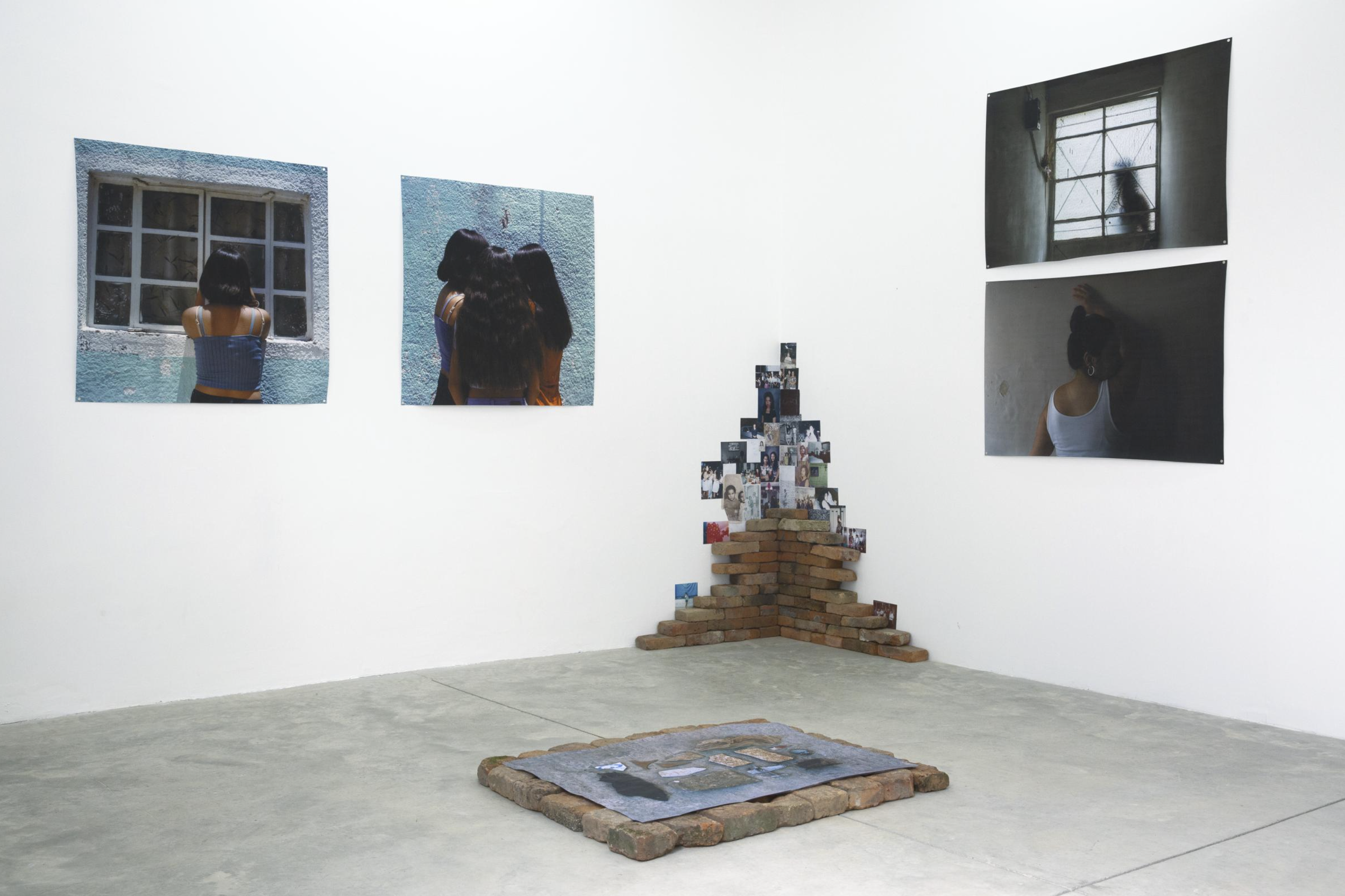
Undocumentedness presents Francisco Donoso's reworking of the chain-link fence as a site of infinite healing rather than a boundary. Across Undocumentedness DACAmented Donoso reshapes the wire structure endlessly until its psychological monumentality collapses and color turns liminal, marking interconnected passage rather than separation. Where Anzaldúa's Nepantla transformed the self between two worlds Donoso holds the self faultless and metamorphoses the space instead, making room for undocumented bliss, pleasure, and beauty.
Spring Break Art Fair, Culver City, CA

2021
-
![]()
Artfields
…
-
![]()
Anthropocene Epiphany
Description goes here
2020
-
![]()
Janus
Description goes here -
![]()
Conexion
Description goes here -
![]()
Driveway
Description goes here -
![]()
Home
Description goes here -
![]()
Qipo
Description goes here
2019
-
![]()
Moment of Silence
Description goes here -
![]()
Coalescence
Description goes here -
![]()
On Their Backs
Description goes here -
![]()
Denounce
Description goes here -
![]()
Cuentista
Description goes here -
![]()
Zempoalxochitl
Description goes here -
![]()
On The Surface
Description goes here -
![]()
Farming Youth
Description goes here -
![]()
Destruction
Description goes here


2018
-
![]()
Pialli
Description goes here -
![]()
Shadow as Witness
Description goes here -
![]()
Colores Campesinos
Description goes here -
![]()
Conscious State of Truth
Description goes here -
![]()
"Black... Matters"
Description goes here
2017
-
![]()
Below the Underground
Description goes here -
![]()
It's Only Natural
Description goes here -
![]()
Glitter Bold
Description goes here -
![]()
Calyx
Description goes here -
![]()
Solemn Grace
Description goes here -
![]()
Geometric Abstraction
Description goes here -
![]()
Suverted
Description goes here -
![]()
Emotive Sensibilities
Description goes here
2016
-
![]()
La Sombra
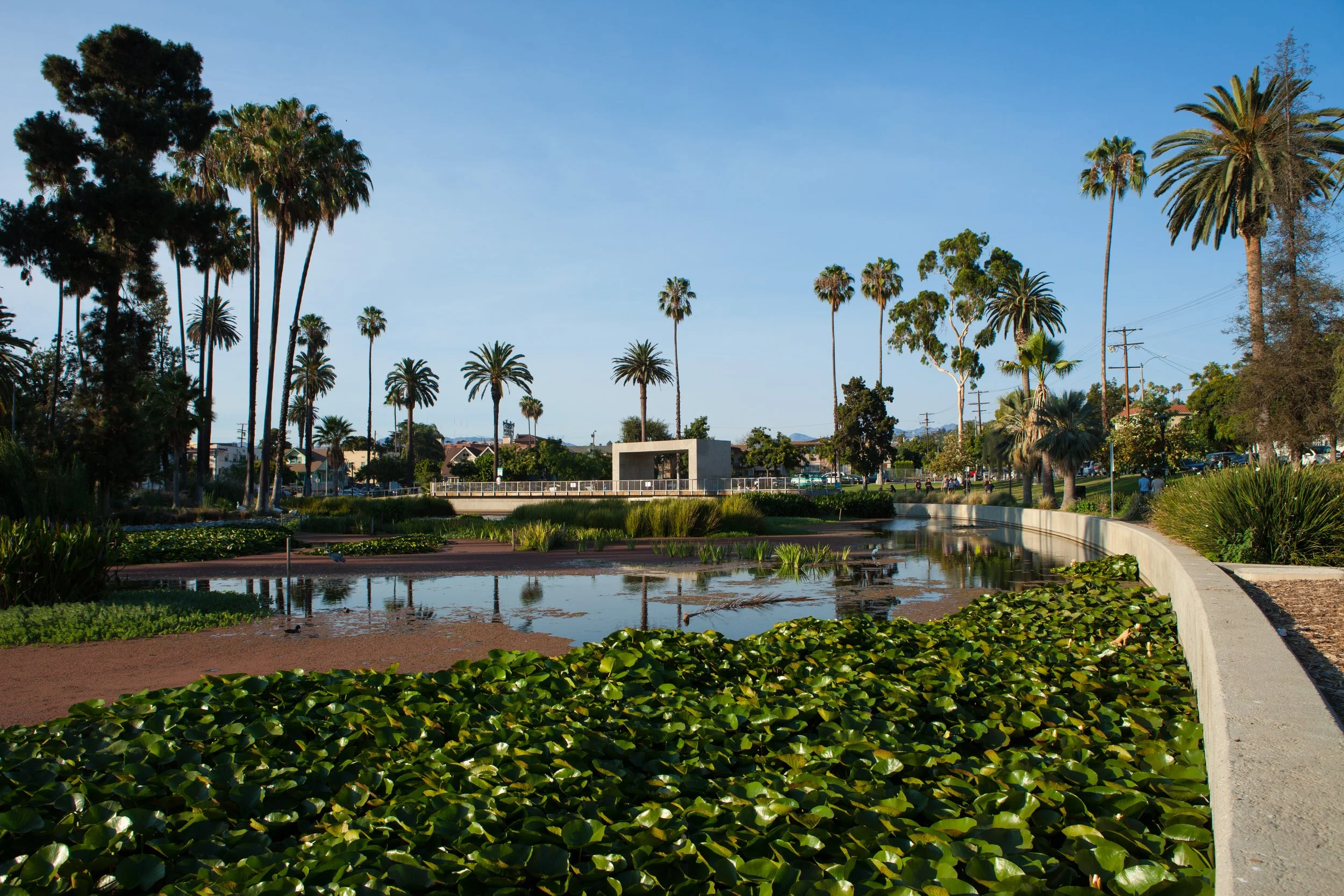
Teresa Margolles’s La Sombra stood more than twenty feet tall at Echo Park Lake, commissioned for the CURRENT:LA Water biennial. Its concrete was mixed with water recovered from the ritual cleansing of one hundred sites across Los Angeles where people had been killed — each bottle logged with a name, an age, a date, a location. What La Sombra offered the park was shade: a place where people gathered to cool off and children played, above ground that carried the city’s violence inside it.
Echo Park Lake, Los Angeles
-
![]()
Under LA
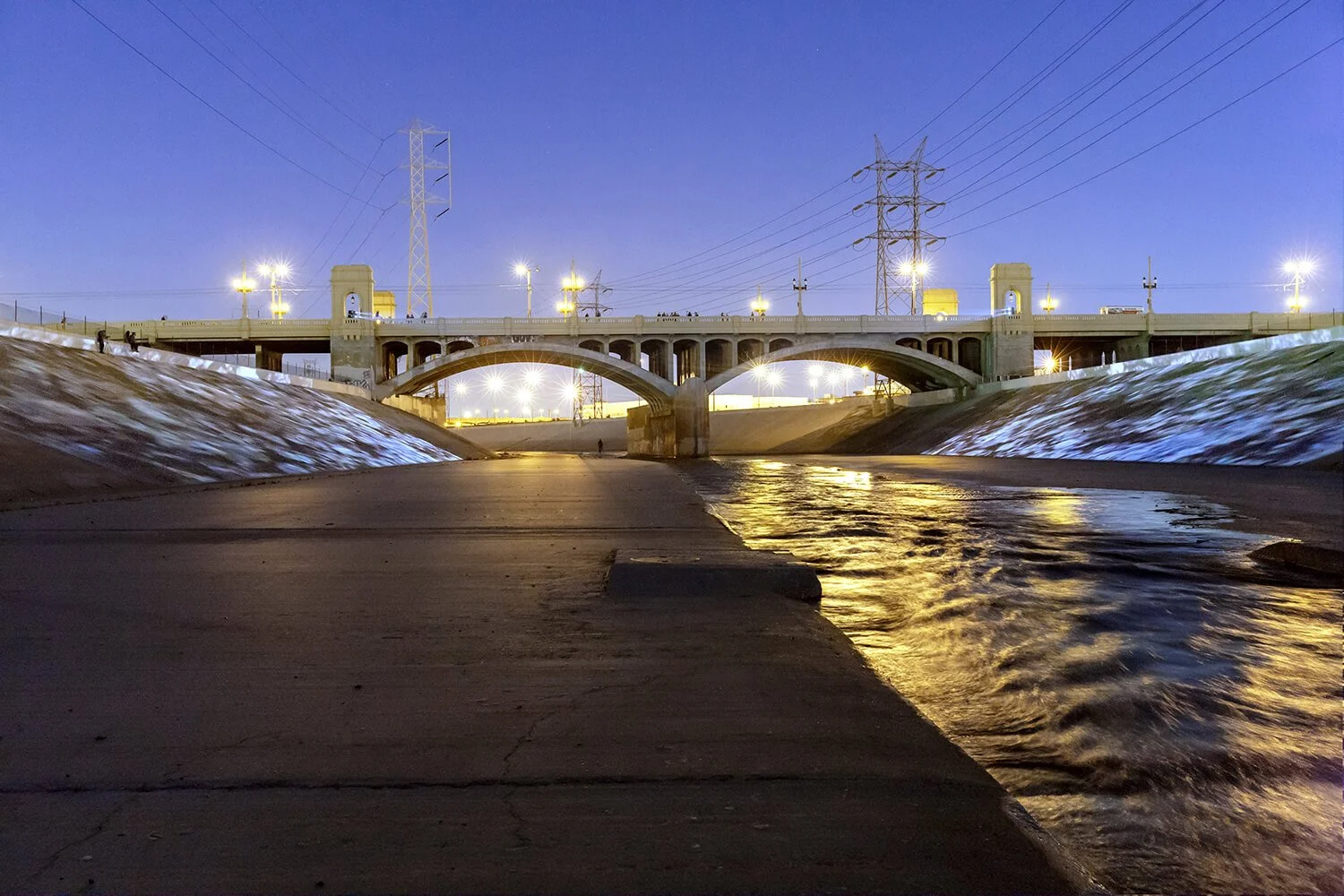
Refik Anadol and Peggy Weil’s UnderLA turned the concrete banks of the Los Angeles River into a screen, projected at the First Street Bridge and at the river’s origin in Canoga Park for the CURRENT:LA Water biennial. Its images were lithologic soil samples collected by USGS geologists at ten-foot intervals from the surface to fourteen hundred feet down, scrolling slowly so that descending through the city’s aquifer meant also descending through 2.5 million years. What UnderLA offered the river was depth: a vertical cut through ground most Angelenos stand on without seeing, made legible on the surface that buried it.
Los Angeles River — First Street Bridge and Origin of the LA River, Canoga Park
-
![]()
Supplement to Ballona Discovery Park
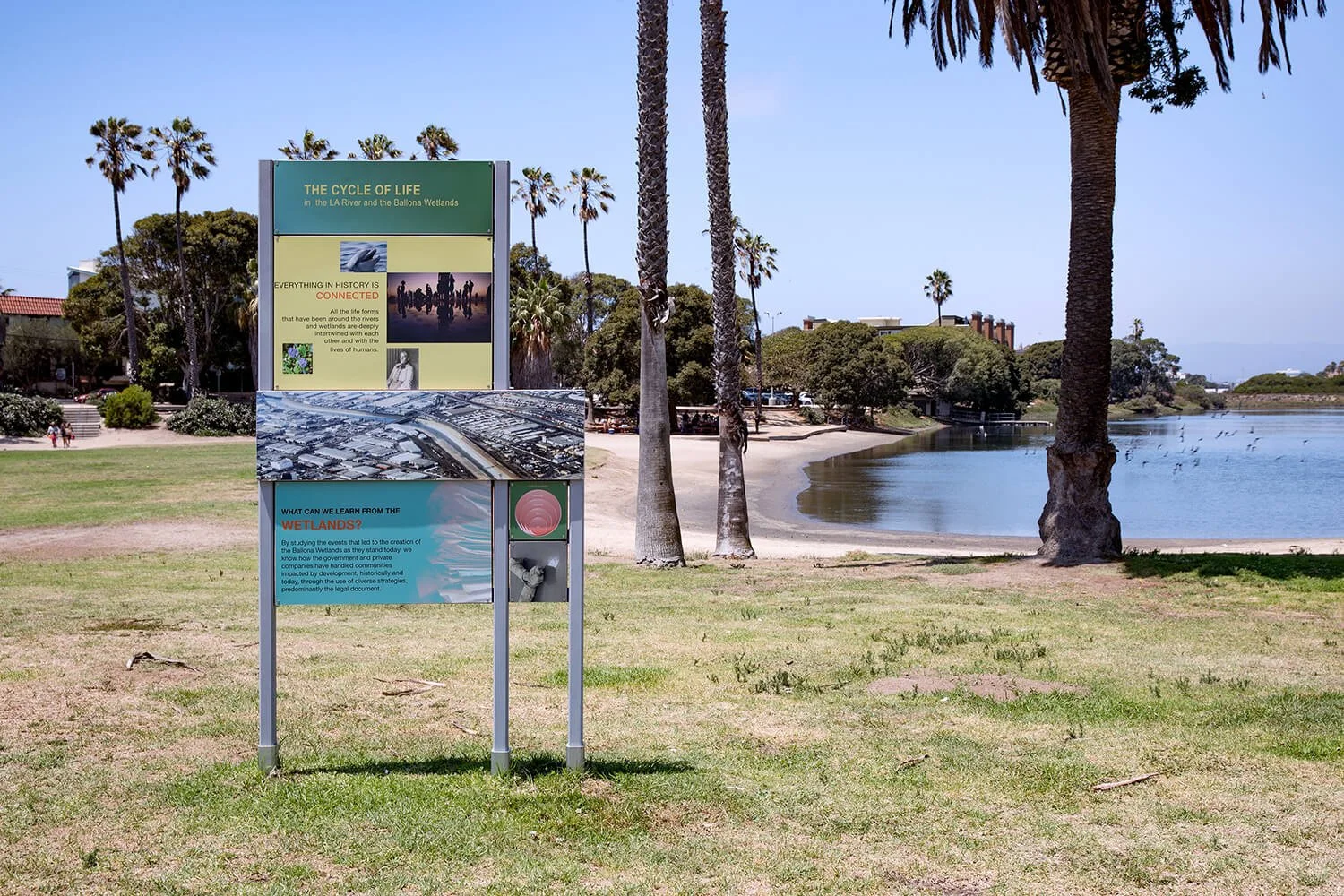
Gala Porras-Kim’s Supplement to Ballona Discovery Park Informative Signs re-created the look of the city’s standard park signage and filled it with the history those signs leave out, installed at Del Rey Lagoon Park for the CURRENT:LA Water biennial. The panels describe the destruction of historic wetlands and Tongva-Gabrieleño religious sites to build the Playa Vista development, and the nearly four hundred human remains exhumed to make way for it. What Supplement offered the park was its own missing text: the familiar brown sign, read as usual by people walking past, now telling the story the park was built on top of.
Del Rey Lagoon Park, Playa Del Rey, Los Angeles
-
![]()
Water Pavilion
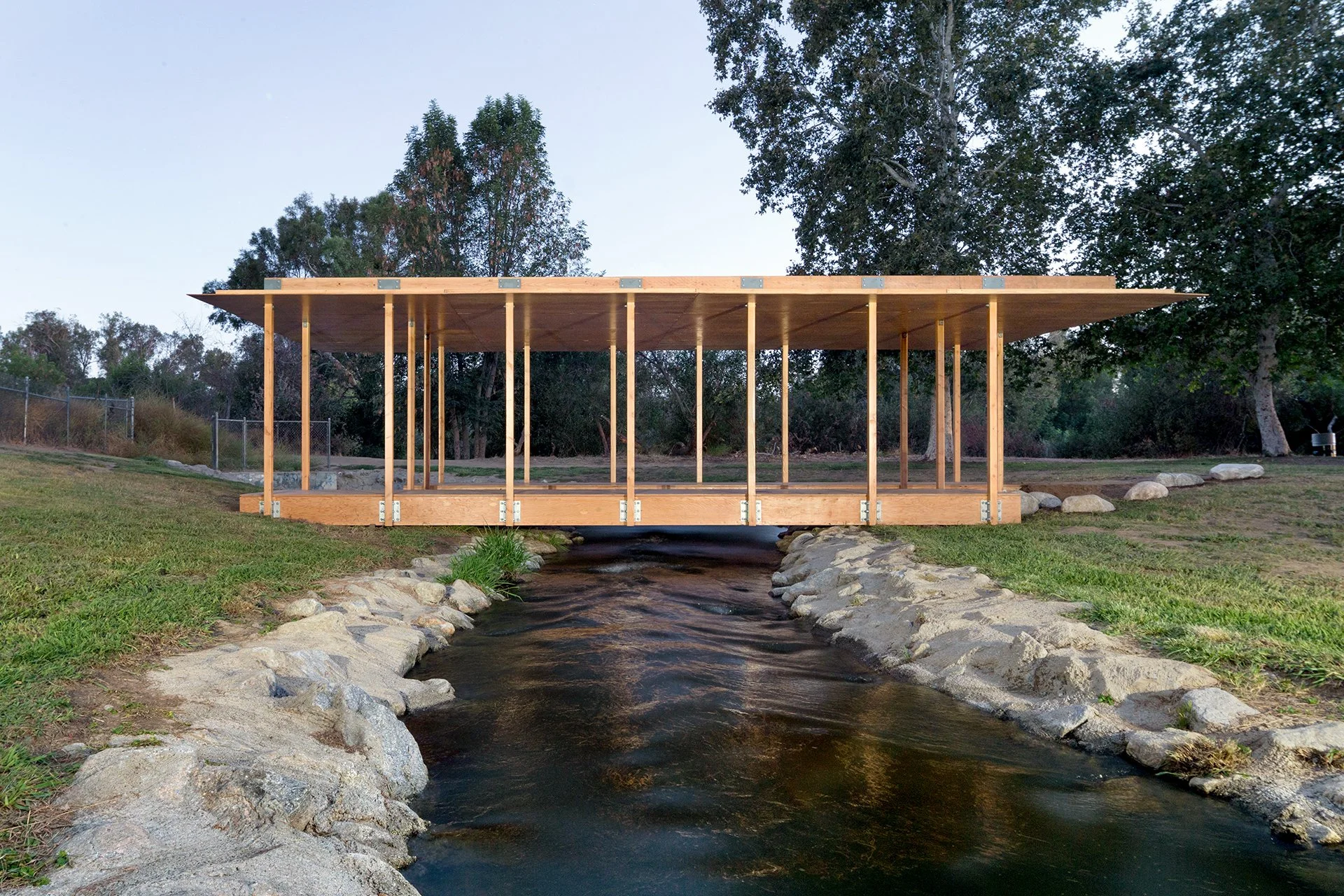
Rirkrit Tiravanija’s Untitled 2016 (LA Water, Water Pavilion) stood at the point where Lake Balboa spills over a waterfall into the Los Angeles River, built for the CURRENT:LA Water biennial with the architect Kulapat Yantrasast and his firm wHY. An open timber-frame structure under a reflective metal-leaf roof, it came with a solar-powered purification wagon that made river water drinkable, and large stones set in the approach to slow visitors down and encourage them to stay. What the pavilion offered the basin was use: Thai monks held a blessing ceremony there, tea masters served from purified river water, people cooked and ate together in a stretch of the river most Angelenos had spent decades avoiding.
Sepulveda Basin, Encino, Los Angeles
-
![]()
Exquisite Corpse
Kerry Tribe’s Exquisite Corpse screened nightly in the open air at Sunnynook River Park for the CURRENT:LA Water biennial — a fifty-one-minute film tracing the fifty-one-mile Los Angeles River from its origin in the San Fernando Valley to its terminus at the Pacific, one minute given to each mile. Alternating close portraits with sweeping aerials, it chronicles the river’s neighbors, animal, human, and vegetal: a swift-water rescue worker, a wastewater treatment plant, riverside neighborhoods, homeless encampments. The title comes from the Surrealist drawing game that knits separate fragments into an uneasy whole, and the joke it carries is Tribe’s own — this corpse of a river is teeming with life wherever you look.
Sunnynook River Park, Atwater Village, Los Angeles
-
![]()
Remix
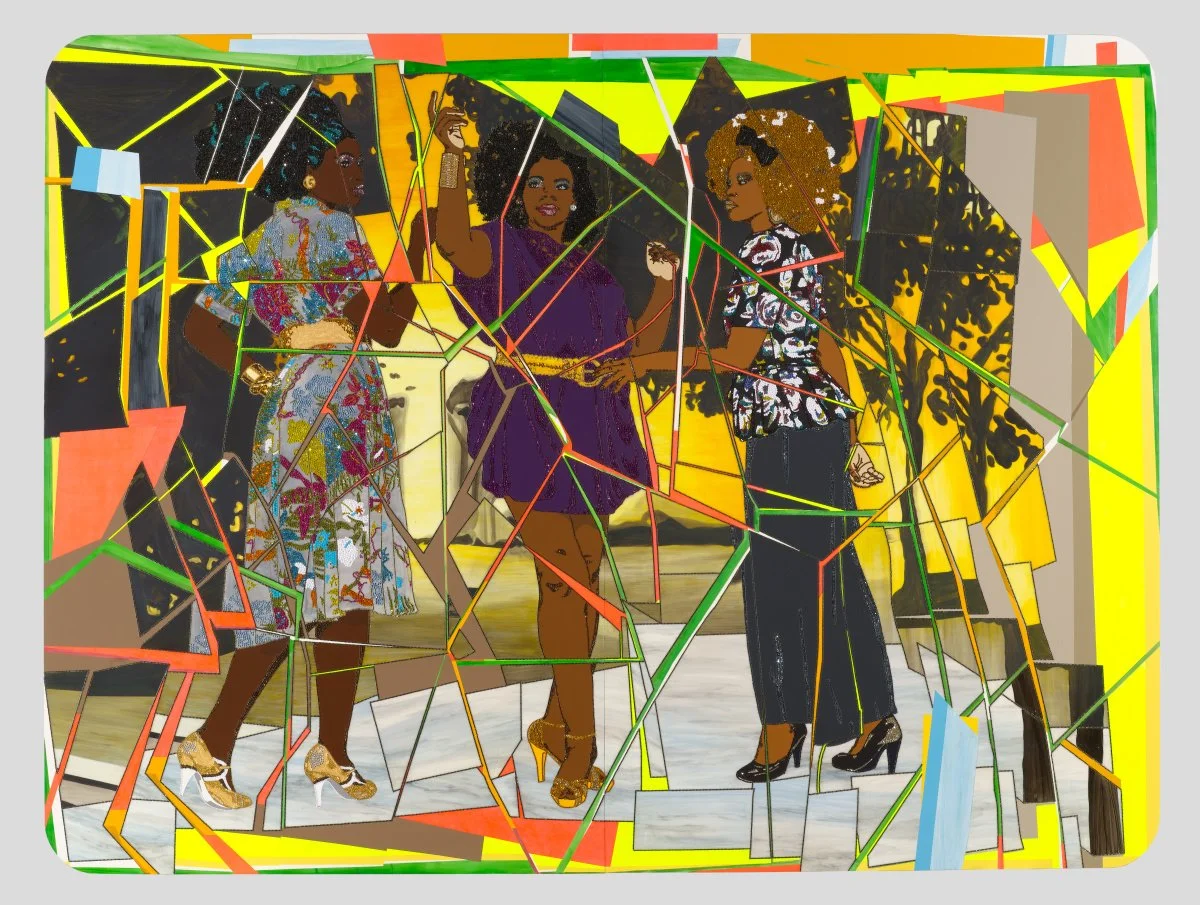
REMIX: Themes and Variations in African-American Art gathered work that reassembles and reconfigures prior sources from history and culture into something new, presented at the Columbia Museum of Art as the only venue. Its underlying thesis — the first time a museum had set out to test it — held that many dynamic African-American artists have drawn inspiration from images, stories, and styles of the past and remade them through their own perspectives, imbuing them with fresh context and often entirely new meaning. REMIX featured some of the most significant artists of the twentieth century alongside those working today, with an accompanying catalogue developed in parallel.
Columbia Museum of Art, Columbia, SC

2015
-
![]()
Resistance and Vortex: Marcela Armas
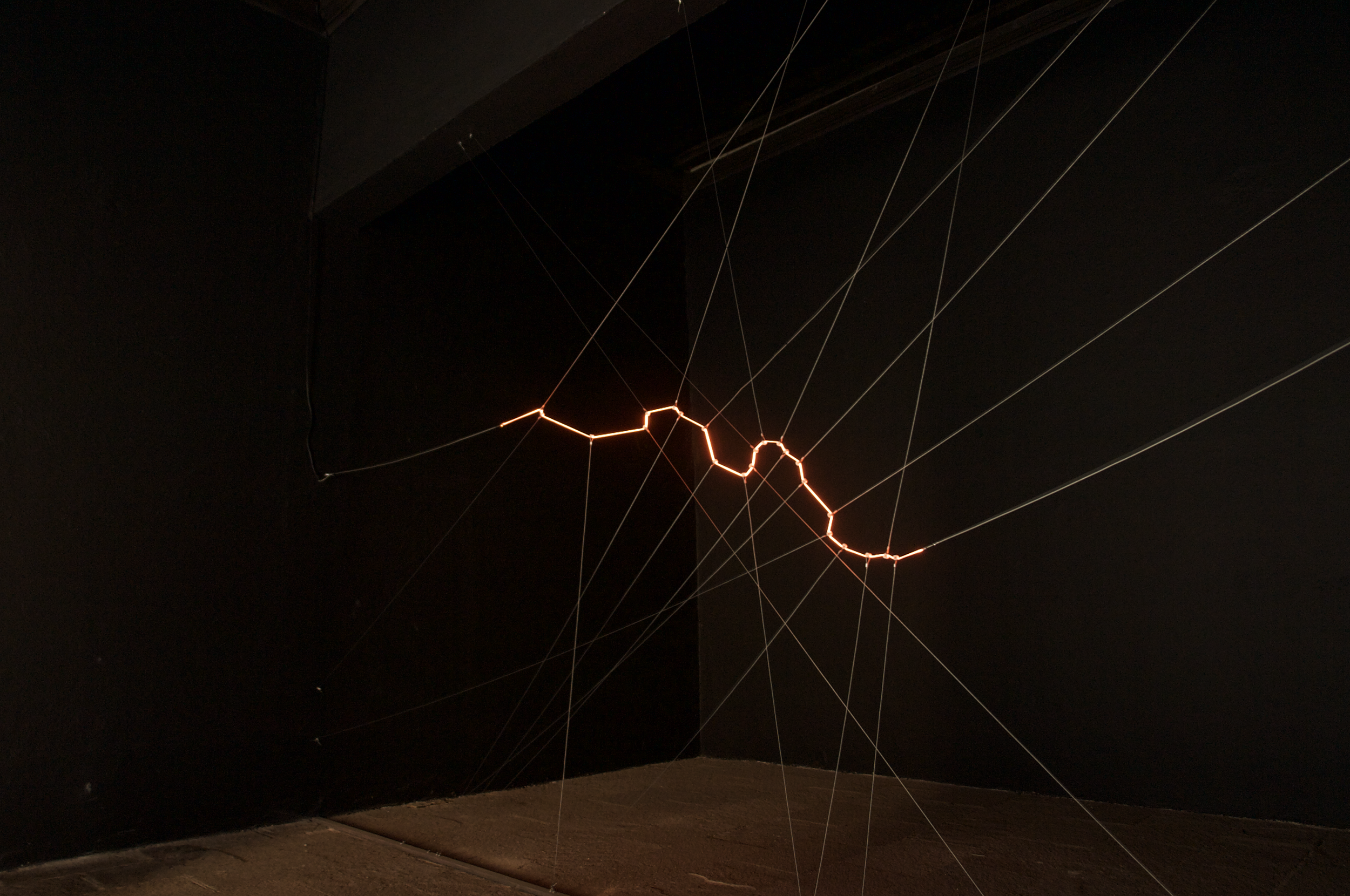
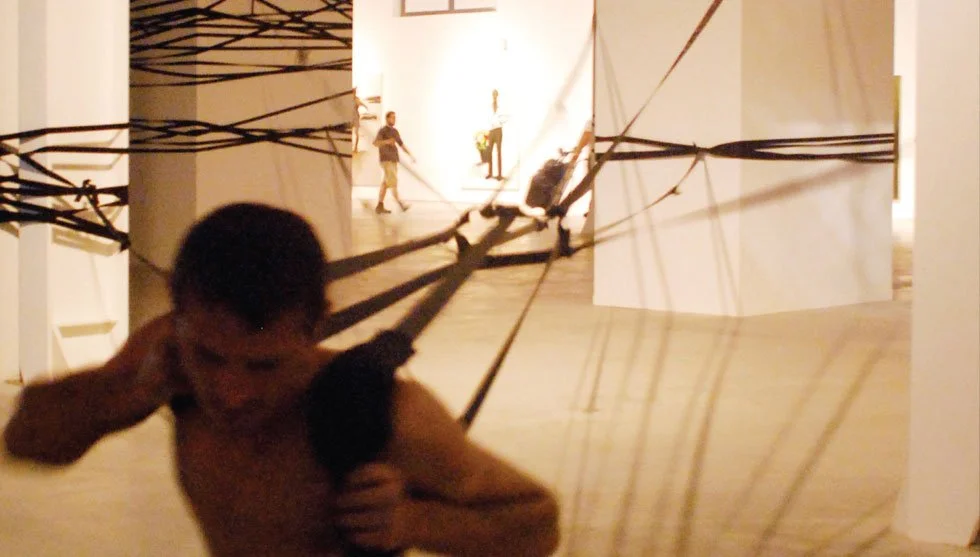
Showcasing the work of an artist who has made significant contributions to the development of contemporary art and new media from México. Resistance visually outlines the México/U.S. border with incandescent metal filament held together by steel cables; the lines emanating from points along the border represent the guarded and embattled economic lifelines shared by neighbors in both countries. Presented alongside it is a body of work — artifacts, documentary video, and sculpture — made in support of Vortex, inviting discussion of the economic and political crisis of modern-day México while representing the frontier as a dangerous boundary.
Museum of Latin American Art, Long Beach, CA
-
![]()
Transcendental Convergence
Transcendental Convergence seeks to confront Mexican identity, trans-nationality, and the desolation of México through photographs and an interactive installation by two Mexican-born artists. At its center is a photographic installation of portraits capturing common struggles of the Mexican public. Transcendental Convergence provides an aesthetic social critique that questions the cultural context of the country and its people — daring to discuss the economic exchange of body-politics, transnationalism, identity, and citizenship, while implicating the audience in the socio-political situation the work explores.
Marcas Gallery, Santa Ana, CA.
-
![]()
Colonia Libertad
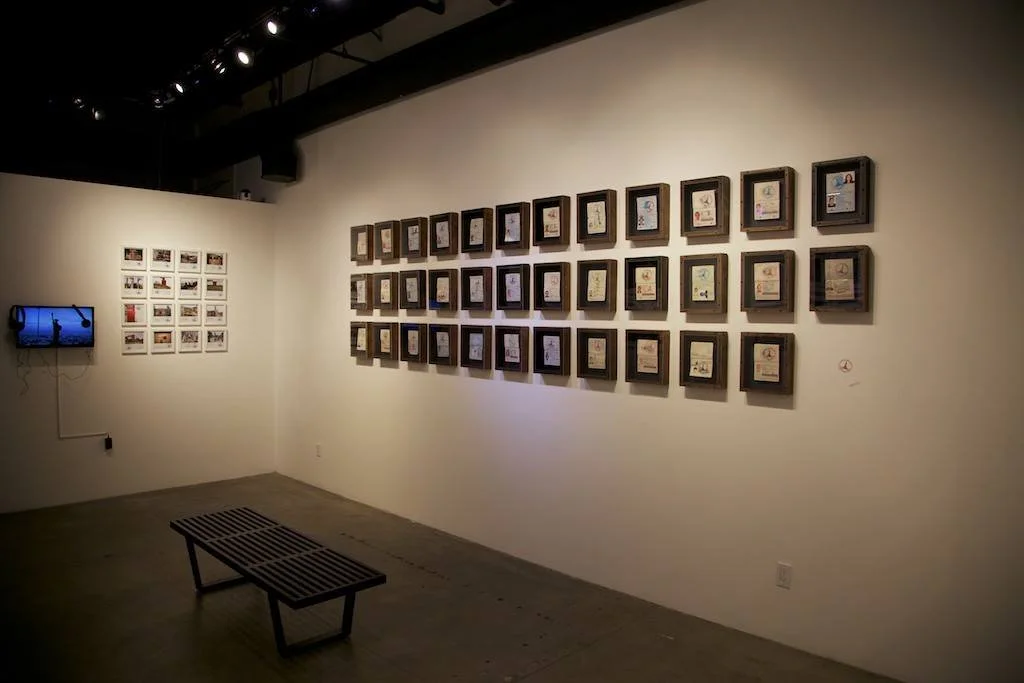
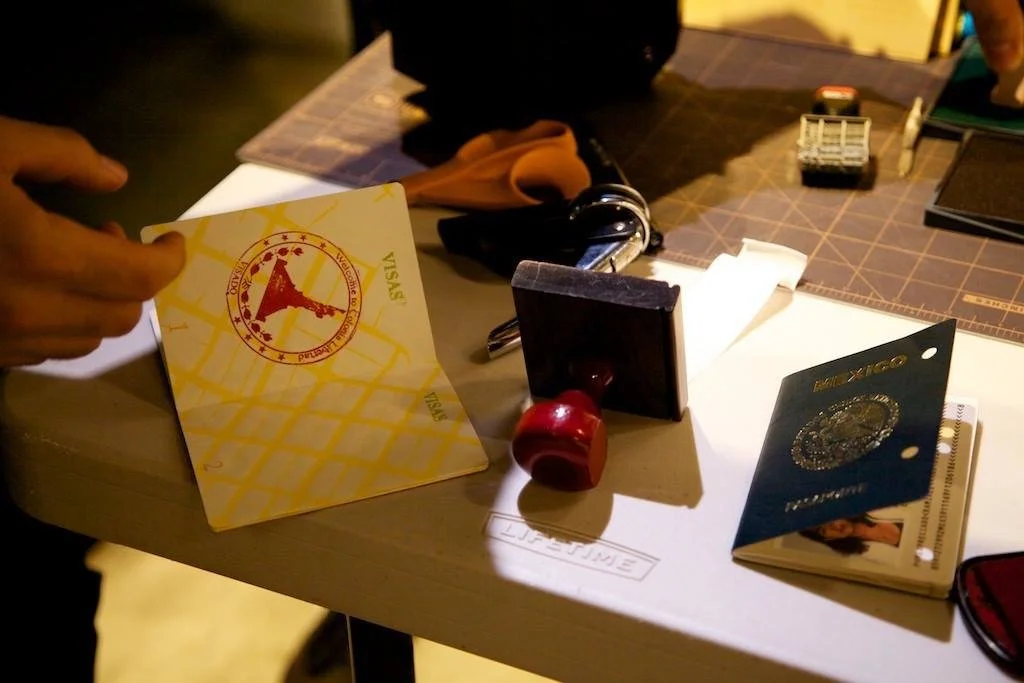
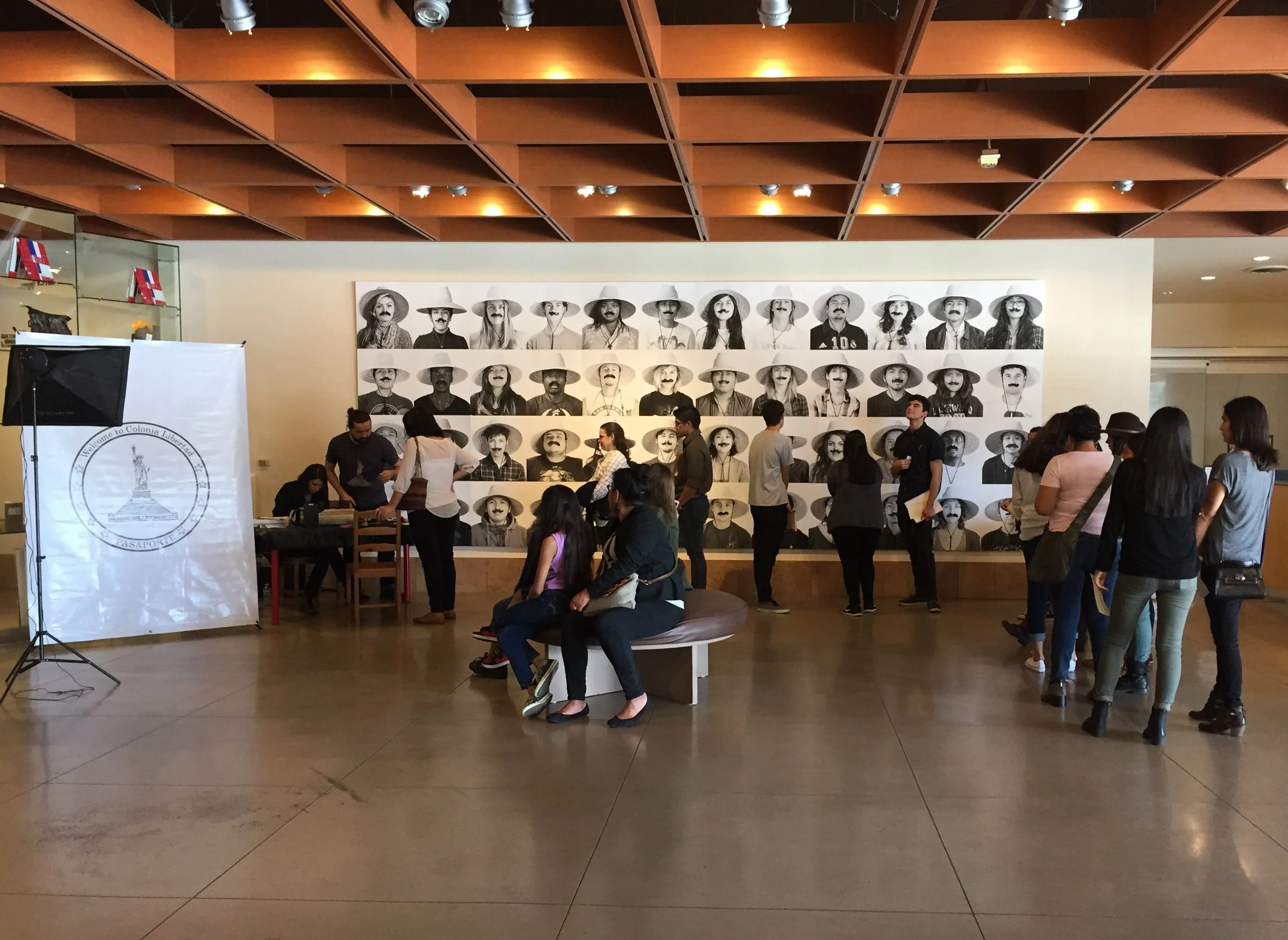
A participatory installation in which a mobile consulate issues passports for a seceded Tijuana neighborhood. Welcome to Colonia Libertad appropriates Bartholdi’s original sketch for the Statue of Liberty, reproducing it in plaster atop a pre-Columbian pedestal — a figure made in the material and manner of the border souvenir trade. Expired passports are exchanged for Pasaportes Libres, and Welcome to Colonia Libertad scrutinizes naturalization and citizenship as social constructs rather than legal facts.
Marcas Gallery, Santa Ana, CA
-
![]()
Colonia Libertad
Welcome to Colonia Libertad takes its name from a Tijuana neighborhood founded by unionized workers — roughly, “freedom colony” — and turns it into a jurisdiction that issues its own citizenship. Through the Mobile Consulate, Welcome to Colonia Libertad grants a Pasaporte Libre to anyone who applies, exchanged for an expired passport that then enters the project’s archive. Scrutinizing bureaucratic naturalization and citizenship as a social construct, Welcome to Colonia Libertad serves at once as analogy, allegory, symbol, and accusation, authenticating undocumented bodies while problematizing the legal process that documents them.
Museum of Latin American Art, Long Beach, CA
-
![]()
Intima Introitum
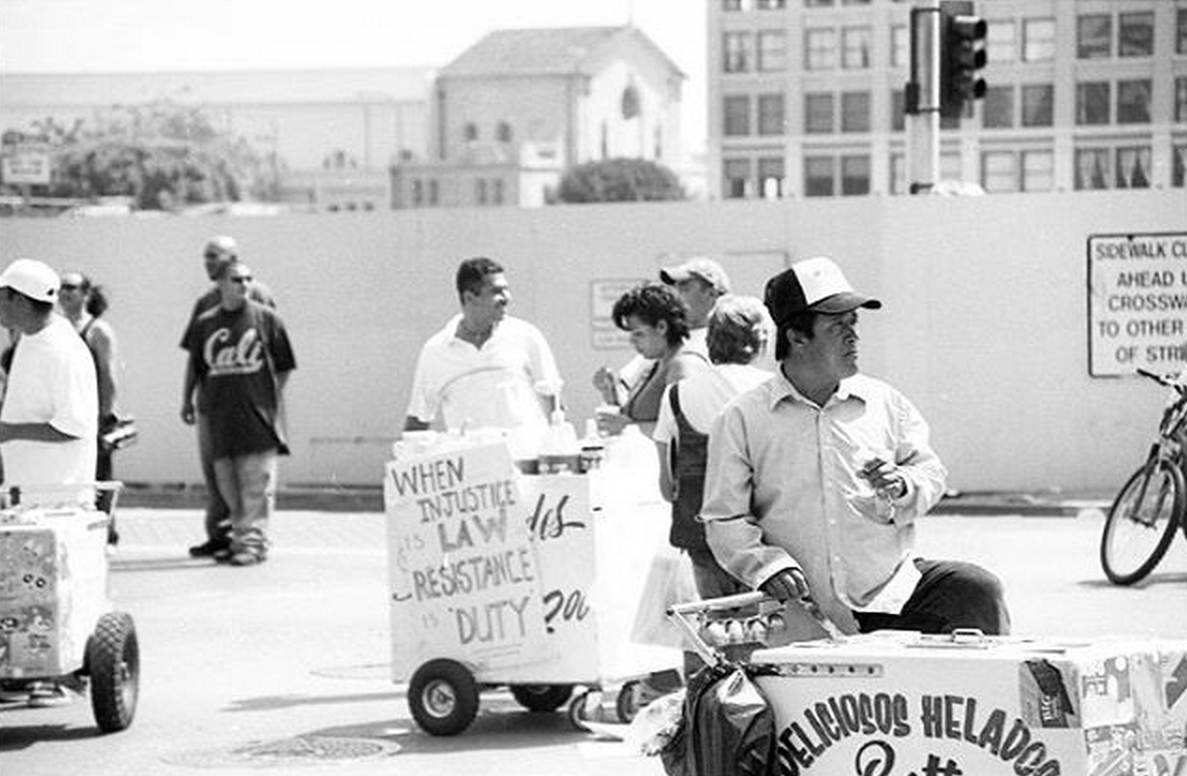
A glimpse into the subjectivity of an emergent Chicano artist in his first solo exhibition. At twenty-five, working in the greater Los Angeles area, the artist looks introspectively, and the works here depict the various preoccupations of his livelihood — rendered through elements drawn from the card game Lotería, its figures repurposed to chart an artistic and personal journey. What results is an affair between the painter’s personal life and its rendering on canvas: in his own account, he digs deep and bares his heart there, and asks that we venture in after him.
Marcas Contemporary Art, Santa Ana, CA
2014
-
![]()
Frida Kahlo: Her Photos
Over two hundred photographs drawn from Kahlo’s personal archive at La Casa Azul — images of Frida, by Frida, and for Frida, never intended for public display. The archive sat sealed for roughly half a century after her death; from the more than 6,500 photographs were selected a holding that reflects the interests running through her tumultuous life: her family, her fascination with Diego and her other loved ones, the broken body and medical science, her friends and some enemies, political struggle and art, indigenous communities; all shrouded in the great passion she had for México.
Museum of Latin American Art, Long Beach, CA.
-
![]()
NeoMexicanismo
Mexican figurative painting of the 1980s, turned against the national image the state had spent fifty years exporting. Where the Mexicanism of the 1930s consolidated a post-Revolutionary identity through Rivera, Siqueiros, and Zúñiga, the artists gathered here — Mónica Castillo, Julio Galán, Nahum B. Zenil, and others working from the 1980s onward — refuse that identity as fabricated, gender roles and political stability included. Drawn primarily from MOLAA’s permanent collection, with additional works on loan from the collection of Nicholas Ingram.
Museum of Latin American Art, Long Beach, CA
-
![]()
Velorio
El Velorio’s fourth annual Day of the Dead celebration gathered more than fifty contemporary Los Angeles artists for an evening of art, ofrendas, live music, and altar installation. Benefiting Plaza de la Raza, the only multidisciplinary community arts venue dedicated to serving the Eastside, El Velorio drew thousands together for the aesthetic convergence of Latino culture and heritage. Across mediums and styles — hyperrealism, suprarrealism, magical realism — El Velorio offered an alternative space for contemporary artists working outside the gallery system.
Plaza de la Raza, Lincoln Heights, Los Angeles
-
![]()
Distant Parallels
This project brought together five young Los Angeles artists with personal and family origins in Latin America. Working across photography, painting, installation, and intervention, the artists in Distant Parallels trace the gap between inherited geography and lived one — the parallels that hold across distance and the ones that never quite meet. Black-and-white images shot on film depict abandoned places and people in communities on both sides of the California–México border, while doctored pages torn from high-end art and design magazines reinsert the service workers those publications edit out.
The Collaborative, Long Beach, CA
-
![]()
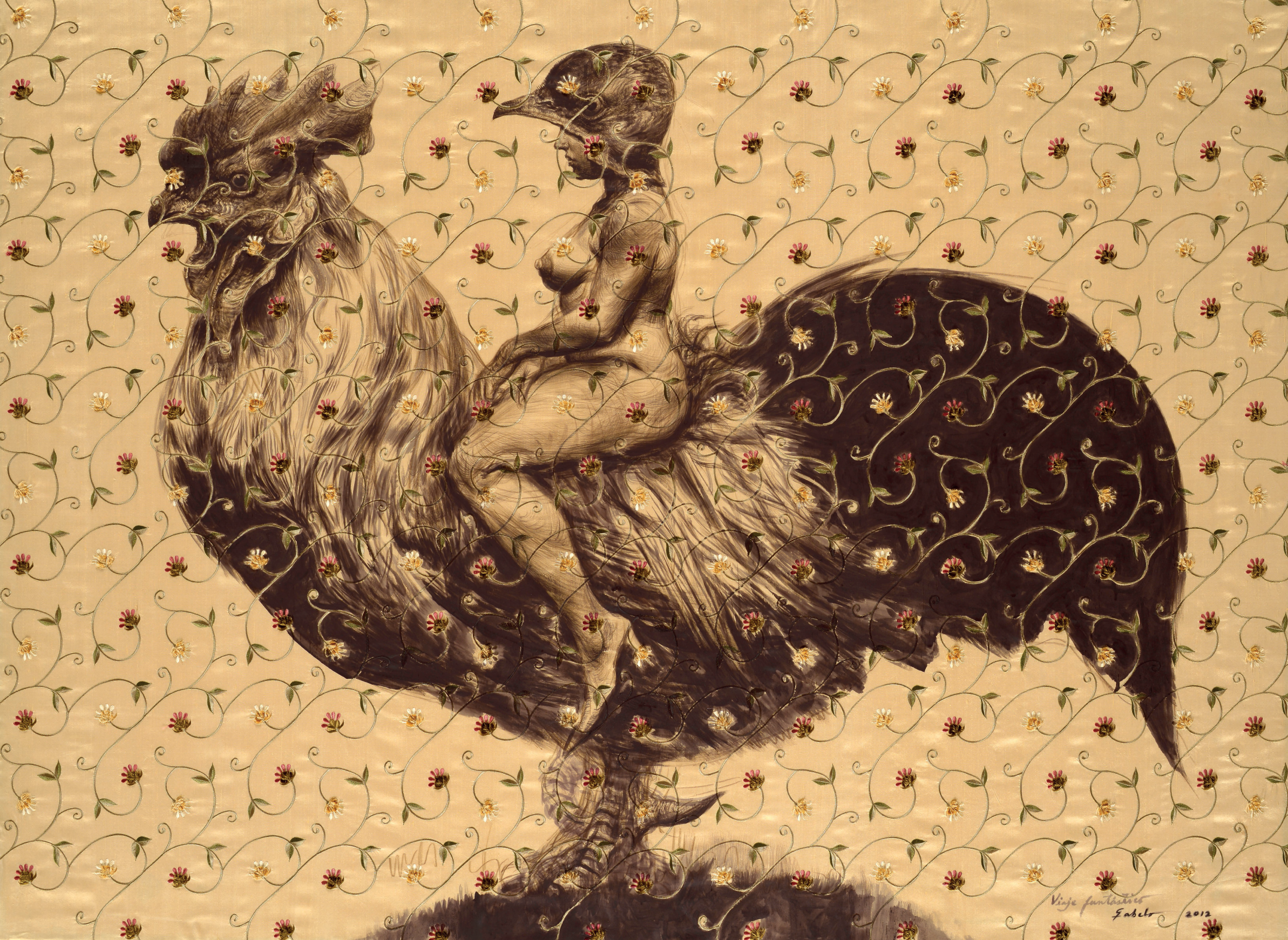
Fabelo's Anatomy
A glimpse into the complex world of imagery emerging from one of Cuba’s most compelling artists, in his first solo museum exhibition in the United States. Strangely beautiful nude female torsos — sometimes winged, at other times sporting beaks — peer out from pages of anatomical texts that seem to describe these haunting and unusual creatures. The metamorphosis of these human figures into hybrid forms parallels the transformation that takes place in the viewer, who is forced to question their own perceptions of fantasy and reality.
Museum of Latin American Art, Long Beach, CA
-
![]()
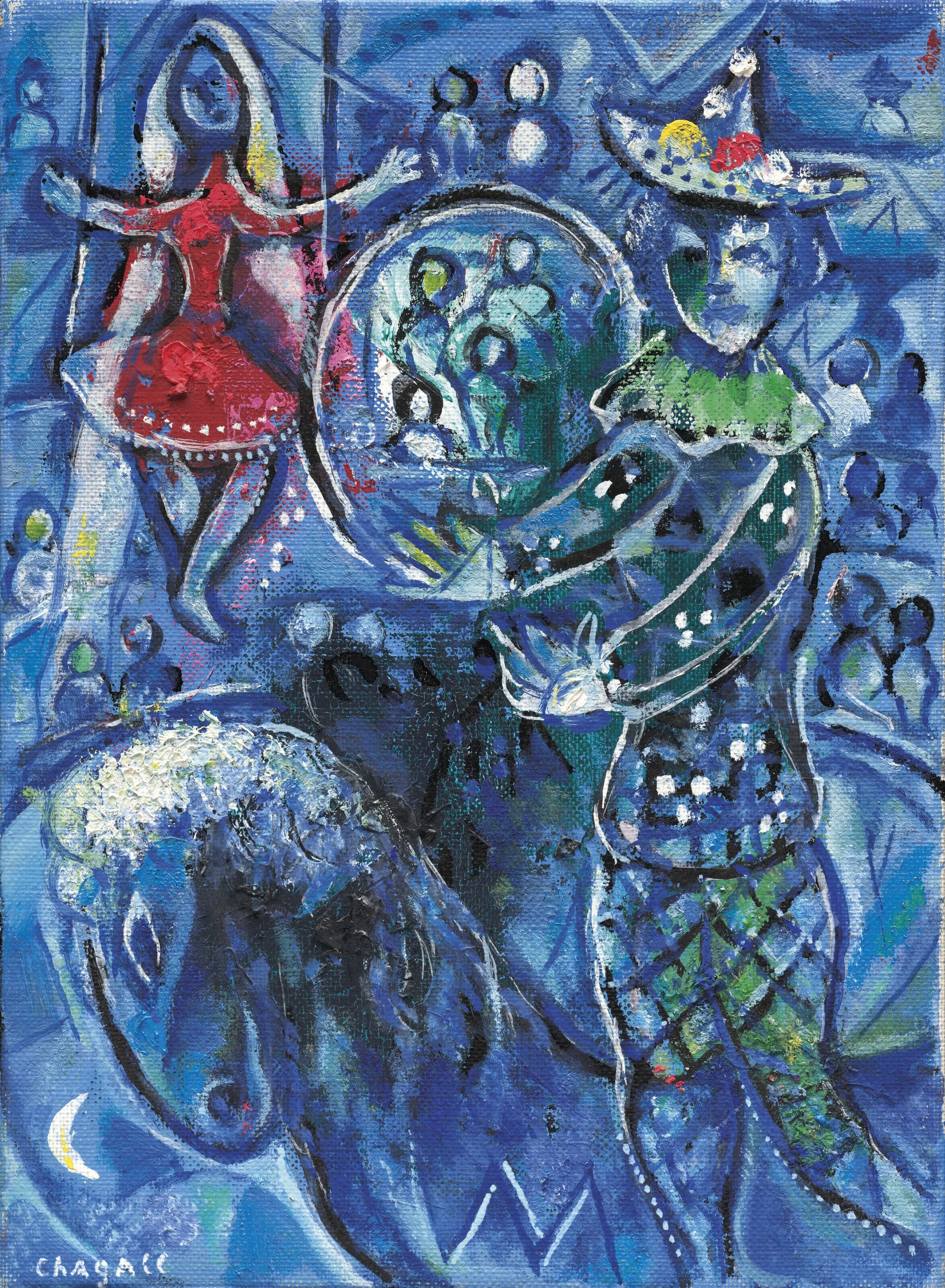
The Color of Love
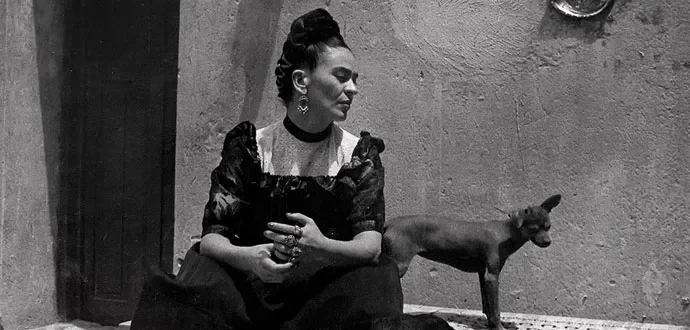
The title of this project comes from Chagall, who held that a single color on the painter’s palette gives meaning to both life and art, and named that color love. Across works on paper, the exhibition follows the claim at face value, tracing how color carries feeling in an artist for whom the two were never separable, and for whom lovers, violinists, animals, and villages float free of gravity because sentiment, not perspective, organizes the picture. What emerges is Chagall not as a modernist to be situated among movements, but as an artist who spent a long career insisting that tenderness was a formal problem.
Galerie Michael, Beverly Hills, CA
2013
-
![]()
Testigo del Siglo
Borrowing its name from François Bucher’s Witness of the Century , this group show takes up Guattari’s three ecologies to refuse the reduction of systemic collapse to environmental cause alone. What emerges instead are questions about our relations to the objects around us, and about why contemporary social structures cannot regulate their own resources. Built from imagery of fashion, luxury, economy, philosophy, culture, war, suburbs, and history, the room reads as a laboratory whose purpose is left deliberately unresolved.
Museo de Arte de Zapopan, Jalisco
-
![]()
Teresa Margolles: La Promesa
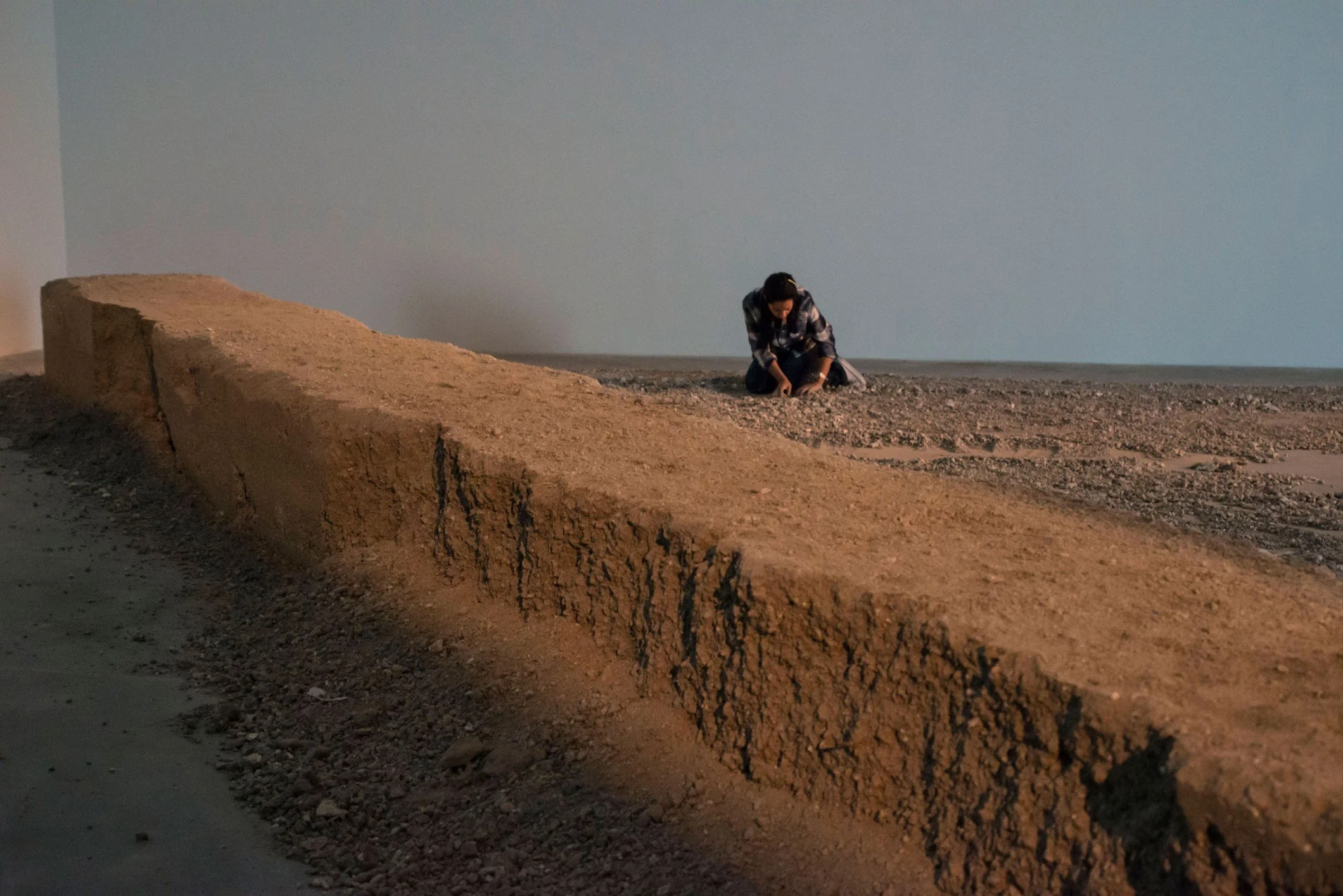
A site-specific commission built from a house. Margolles bought an abandoned social-interest home on Puerto de Palos in the Praderas del Oriente development of Ciudad Juárez — one of more than 115,000 left empty as people fled the violence — and had it dismantled over eleven days, slowly and in detail, in deliberate contrast to the speed with which destruction actually occurs there. The walls arrived in Mexico City by truck and were pulverized into a horizontal sculpture; over the run, volunteers displaced the debris an hour at a time until the remains covered the floor of the gallery entirely.
Museo Universitario Arte Contemporáneo, UNAM. Ciudad de México.
-
![]()
ASCO Elite de lo Oscuro
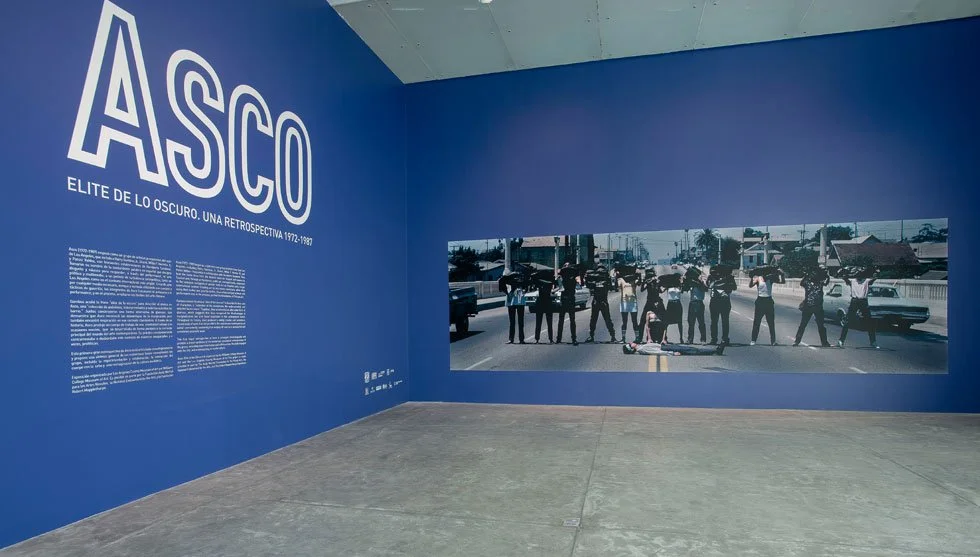
The first exhibition to present the full range of work by Asco, the Chicano conceptual art and performance collective active in Los Angeles from 1972 to 1987 in México City. Taking its name from the blunt Spanish word for revulsion and nausea. Asco used performance, public art, and multimedia to answer periods of socio-political turbulence in Los Angeles and beyond. Working by any means necessary, often with their own bodies and guerrilla tactics, Asco fused activism and performance, and in the process pushed the limits of what Chicano art could encompass.
Museo Universitario Arte Contemporáneo, UNAM, Ciudad de México.
-
![]()
Por Amor a la Disidencia
The first series of exhibitions in Proyecto Sexta Sur, comprising four solo presentations by emerging artists, national and international, staged at different moments but bound to one another. The title took its sense from a set of reflections on space and the ways it is occupied; establishing a dichotomy between above and below, outside and inside, center and periphery, with the aim that each proposal integrate antigravity as a fundamental vector while thinking it as a dissident reaction. Centered on installation practice, the cycle sought to generate a space of alternation and experimentation permitting divergent and spontaneous interventions to enter into genuine dialogue.
Museo Universitario Arte Contemporáneo, UNAM, Ciudad de México.
-
![]()
La colección: un siglo de crítica
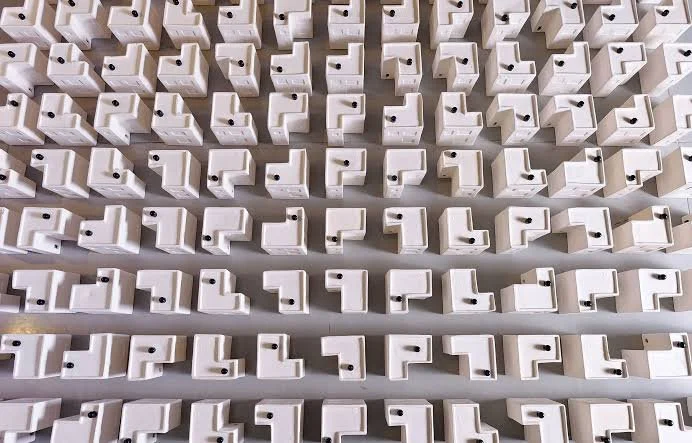
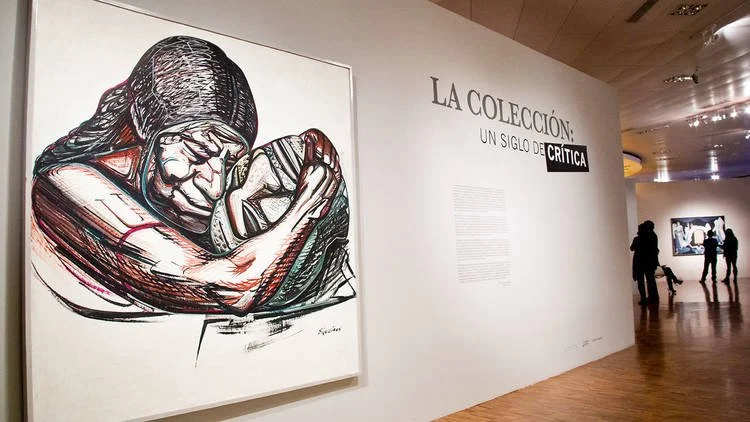
Drawn from the MAM’s own holdings, this exhibition traced the critical posture that emerged in Mexican modern art after the Revolution of 1910 and carried through the rest of the twentieth century. More than fifty works gathered artists who question the country’s social and political circumstances — from disenchantment with the unfulfilled promises of revolutionary ideals through to present-day conditions. Painting, sculpture, and photography move together across the selection, which includes Xavier Esqueda’s Monolito No. 6 (1990), Enrique Metinides’s untitled image of the Hotel Regis on September 19, 1985, and Teresa Margolles’s Ajuste de cuentas 15 (2007).
Museo de Arte Moderno, Ciudad de México.
2012
-
![]()
Manuel Alvarez Bravo. Una biografía cultural
Departing from conventional photography exhibitions, this project turned its attention to the man himself: his collections, his tastes, and the world surrounding his life, aspects rarely shown publicly before. Assembled from photographs, prints, paintings, popular art, archaeology, books, and posters, this cultural survey included a selection of his earliest photographs and highlighted little-studied facets of the artist, including his collecting and his interests in literature, archaeology, and folk art.
Museo del Palacio de Bellas Artes, Ciudad de México -
![]()
Brian Nissen: en la mira los primeros 25 años
This exhibition gathered about 120 works, making it the first retrospective. Ten chronological nuclei traced thematic, technical, and formal lines across painting, ink, ceramics, video, and art-object, alongside audiovisual documentation of his large-format public sculptures.
Museo del Palacio de Bellas Artes, Ciudad de México
-
![]()
Art & Revolution (2011)
Ten women artists converge in Art & Revolution, working across painting, photography, an mixed media works throughout Southern California. Art & Revolution takes up the political histories of this region — labor, immigration, policing, land — from the position of those who organized them without being credited for them. What Art & Revolution makes visible is the difference between who leads a movement and who holds it together.
Powell Rotunda, UCLA